Saturday, October 4, 2008

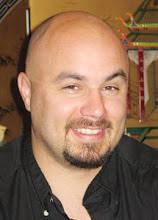
Leif with his "famous" Oakleys - Puerto Rico 1991 - Age 16


You'd think that after all the times I've mentioned Leif's Oakley sunglasses I'd have a whole series of photos with him wearing them, but I don't. I found another one with them hanging from his neck, and I think there are a couple more, but not many.

This was his first pair, and he accessorized them with different colored top bars, nose pieces and ear pieces, all in neon colors. As a grown man, he still went for stylish, expensive eyewear, but his most recent pair of Oakleys were more conservative.

Leif generously gave his "hand-me-down" cool stuff, sunglasses or techie stuff like cell phones, to us. When he "graduated" to Oakleys from Gargoyles, he gave the Gargoyles to his dad, but I don't think they were quite his style and he didn't wear them. Then Leif bought a new pair of Oakleys for Peter W. for either Christmas or birthday, and he still has them, though he rarely wears them.

As a high school student, like he was in this photo at age 16 in Puerto Rico, Leif had an allowance that was supposed to cover entertainment, incidents, haircuts, school lunches and the like. It was based on a budget with enough extra for some fun and entertainment like movies with friends.

It was all spelled out in a "contractual agreement" which we both signed. I made contracts for all kinds of things with my sons. (Leif told me recently he thought I ought to write a book about it because he thought it was a good idea.) I liked the formality of it and having terms clear, none of that, "Well I thought you said," or "I thought you meant," or "You never said that."

Leif knew very well what his allowance was supposed to cover, but if he wanted to buy something and hadn't saved up the money for it, or hadn't gotten gift money for his birthday or something else like that, he would simply go spend his allowance on it and do without all the rest for the remainder of the month, even if it meant he had to go without lunch or skip some fun with friends. He got what he wanted and was willing to put up with the inconveniences of doing without other things. And he figured out how to save more money by not cutting his hair, just letting it grow long, to that luxurious hair he had as a high school senior.

The trouble with that was that I think he tried to continue that same way of spending as an adult and it didn't work with bills to pay. (Though he continued to save money on haircuts by shaving his head.)

Wednesday, October 1, 2008

Leif Cutting Up Again - Hawaii, December 1984 - Age 9


Here's another example of Leif having fun cutting up, again with the sunglasses. This was when he was only 9 years old, long before the advent of Oakley sunglasses, at least for him. He started wearing those when he was in high school and could spend his own money on them. I wasn't about to pay that much for sunglasses, but Leif loved to have stylish things that made him look cool.

In Hawaii, "cool" consisted primarily of wearing his black leather Members Only jacket, even in sweltering heat.

This "costume" is actually a spandex swim cap over his face, one that we had from Germany, where even guys were required to wear them in the public pools, a hat and sunglasses. He got a kick out of doing things like making silly faces, putting things on or over his face (you'll see more about that in a Halloween post), and posing.

Leif never wanted to really grow up, and in some ways, he didn't. An adult who still has a sense of fun is great, though there are parts of adulthood we all really do need to survive, some of which Leif didn't develop. But the ability to cut up and have a good time is something we could all use more of.

I think the fact that he kept that is one reason he got a kick out of his nieces and nephew acting silly and he could be silly with them. In the past few years, I've seldom seen him as happy as when he was playing around with them.

Leif Loved to be Silly - Hair in the Face - April 1991, Age 16


Leif had a great sense of humor and enjoyed cutting up and acting silly at times. For those of you who didn't know him when he had hair, this photo is probably hard to believe. When he was in high school, he had luxurious long hair. The guys teased him about it and the girls loved it.

One day he showed up with hair in his face. Those aren't his sunglasses. He would never have worn that style. He wore his expensive Oakleys, after he got done with the Gargoyles, or at least I think that was the name of them. This photo was taken April 12, 1991 when we were living in Puerto Rico. He was 16 years old.

Look how slim he was! Remember Op clothing? He loved it.

I miss that whacky sense of humor.

He could imitate just about any actor or comedian, and often was able to memorize what they said even if he only heard it once. Two of his favorites were George Carlin and Carlos Mencia.

I wish Leif had been a blogger, or a writer in some other venue. He had plenty of talent, just not the burning desire. He could have been quite a wit online if he had chosen to do so.

He had a wonderful, hearty laugh, and I can still hear it on some videos he took with his cell phone a year ago. It was infectious and warm, a feel-good kind of laugh.

Monday, September 29, 2008

Would You Want to Know the Future?


How often have we all said, "If only I had known." Or, "I wish I could know the future." But what about the consequences, and what would you do about it if you did?

Would you want to know that if you had a child, he would grow up to have an unhappy adult life and end up shooting himself in the head? If you knew that, for certain, what would you decide to do? Not have the child? Have it and hope you could somehow change fate? Have it and spend all the years of your lives worrying, being watchful, trying to prevent a tragedy, and not knowing how?

Look at this beautiful child. Leif was such a beautiful child. How could life go so wrong for him? What was it that doomed him, that brought so many depressing circumstances together?

This photo was taken in Furth, Germany, when he was not quite three years old. Doesn't he look happy, eager, curious about life? He never lost that curiosity. He never stopped trying to find out how things worked, never stopped asking why.

I am grateful for the 33 years I had Leif in my life, but I cry every day for the years I will not have. I'm glad I didn't know what was in store for him. I'm glad I didn't have those years saddened by the knowledge of what was to come.

I am a hard worker, but I am not an ambitious person. I never had big dreams. The three most important things in my life are Peter, Peter Anthony and Leif, and they are all I really ever wanted. All the rest was gravy.

I was and am fortunate to have a lot more, much of it to share with them, or because of them, and I am grateful for those things, too, but I would have gladly given them up if it could have given Leif a happy, normal life.

I wanted children desperately, and I was blessed with two handsome, intelligent, interesting sons. No matter what else I did or achieved, I was and am deeply imbued with a need for family. Traditional roles didn't matter, but family did and does. What is there in life that can compare, that begins to approach its importance?

I don't know whether that deep need and desire for a family, a mate and children, is something we learn or whether it is something we inherit, but I suspect it is some of each. Our family was close. We had a special need to be close, because our "home" was each other. As a military family, we had no real roots but each other. We were each other's constancy.

So I think perhaps we all felt that need for a family, not so much a place to call home, as people. I think Leif needed that as an adult man and he couldn't find it, though he tried so very, very hard. That deep need made his loneliness so much worse.

A man needs something to ground him. For some it is a career or some grand goal. For a man like Leif, he needed to be needed. He needed someone to care for. He needed to matter to a soulmate.

I am glad I still have a family, though it has a huge hole in it that will never be filled. Each time I have to do something to settle affairs after Leif's death, it pierces my heart. Tonight, something as simple as removing him as a beneficiary on my retirement account brought me a flood of tears. Why? Because it is as though I'm wiping him out, as though his identity and life are being denied. That may seem foolish. I know he's dead. But that's how it feels, as though his existence is being slowly eradicated except for my memories and photos.

I'm glad I didn't know the future, because I don't know how I could have changed it. I'm glad I had that beautiful boy.

"'I am,' I said, to no one there . . . "


Today was one of those steps-back days. We went to see a Neil Diamond tribute show, and found ourselves overcome with nostalgia, sadness and longing for Leif. Many of the songs seemed to have words and themes that expressed either how we felt, or how we think Leif felt. We hadn't expected to go to a Neil Diamond concert (put on by Jack Berrios and his band and singers) and be overwhelmed with emotion about Leif and our loss.

Leif was not a Neil Diamond fan. In his huge iTunes collection of music, and CDs, there isn't a single Diamond song. I know he heard us play Diamond's music often while he was growing up, but I don't think it spoke to him then. The themes were probably too grown up for him when he was younger, and by the time he was in his thirties, he had other avid musical tastes. However, I think that if he has listened to these songs, he would have appreciated them in his thirties.

The song that particularly affected us was "'I am,' I said," especially the refrain:

"I am," I said
To no one there
An no one heard at all
Not even the chair
"I am," I cried
"I am," said I
And I am lost, and I can't even say why
Leavin' me lonely still

We enjoyed the music, but we were sad, and the sadness continued throughout the rest of the afternoon and evening, dissolving into bitter tears. We talked, again, as we have so many times, about Leif's life, his death, and why it happened, wishing again that we knew why, and knowing we will never know for sure what precipitated him putting the gun to his head that particular night, even if we can surmise the reasons behind it. Wishing again we could have helped him, that we could have him back.

Thinking about this reminded me of a Yahoo IM chat he and I had on October 27, 2005. What he had to say speaks directly to the theme of loneliness and why men are lonely.

I have edited out most of my comments (prairiejerri) and left his intact. He was chatting under his Graeloch identity. He said:

-------------------

Honestly, I think that there is a reason that women tend to outlive their husbands and that you hear of old men losing their wives and dying of a broken heart. The bottom line is that men are lucky to have one lifelong friend in their lives and that is their wives.

Men can't have women friends because sex always gets in the way. We can't have male friends because sex gets in the way. So the only friend a man can ever have is a person that is both the lover and a friend or a mate.

It comes down to the primate pecking order. Men can't be friends. PERIOD. Comrades, yes. Buddies, yes. But not friends. A man can't open up to another man because that is to reveal weakness which can never be done to another man. You can only reveal weakness to someone that is not part of the game, e.g. a woman.

It's both kind of inspiring and kind of sad. Lonely, too. It is both triumphant and tragic. Men are solitary, sad lonely creatures; strong and proud and lonely. All we really want is a woman. Just one woman to love us.

prairiejerri: You'll make me cry. (Now there's another thing I don't like about myself -- tears, which your Dad seems to think I just turn on at will but it's completely beyond my control.)

I would be flattered if I invoked a woman's tears. More than anything a man wants to be appreciated by a woman for the trials and tribulations he endures to be a man, and worthy of a woman's love.

For men there are two differnt things. Genetically it is an advantage for men to mate with as many women as possible. Simple and period. Not the same for women. Well, here is the deal - Men don't know they want intimacy until they have experienced it.


prairiejerri: What if they never do?

They may eventually feel a need they can't explain.

The cliche is that men don't understand women but the bigger and more damaging truth is women don't understand men. Men are beasts. Brilliant, evolved beasts, but beasts none the less.


prairiejerri: Beauty and the Beast wasn't so far off, eh?

No, it wasn't. Men are noble beasts and nothing more. A great allegory and one men love. The poetic idea of fighting of a pack of wolves for our woman is romantic beyond belief. The only thing sweeter then the victory is the nursing we receive from the woman afterwards.


----------------------------------------------------

Leif repeated these things to me at other times, and expanded upon it in an essay about the sexes that I will post here some day.

I think his loneliness was also reflected in the many, many photos he took of himself. He took very few of others, except when he was in a ralationship with a woman. When I see all the photos he took of himself, it seems to me that he is saying, "I am," I said . .

The photo above is one he took while living in Manhattan, Kansas on April 26, 2003.

Saturday, September 27, 2008

Remembering a Life - Missing a Son - The Baby Steps of Grief


I've been posting simple, happy memories of Leif and our lives in Japan the past few days, but ignoring the feelings building up. Recovering from a death like this happens in tiny baby steps, maybe two steps forward and one step back. There are days when I feel like singing, temporarily, until his loss hits me again when I try a song I remember singing to him as a child. Days when I enjoy something and then remember doing that with him. Although I treasure those memories, it is so hard to know I'll never share those things, or anything else, with him again.

I cannot go anywhere in my house that isn't filled with things and memories of Leif. He helped choose this house, helped us move into it, hung the paintings on the walls, chose the phones, helped with the yard, put together my office furniture, lived here for a year.

But beyond that, there are the phone calls and text messages that no longer come, the fact that he's not there to discuss the presidential debates, that he won't see the new James Bond movie, that I'll never see his smile or hold a child of his.

You'd think, or at least I thought, it would be a little easier at nearly six months since his death, but I still am in tears daily, often several times a day. I don't cry long. I get a hold of myself, because I have to.

I am trying to move on in the ways that I can. I'm getting ready to try to sell his motorcycle. Every day I see it in the garage and it is painful. How I wish he were riding up the driveway on it! It's gut-wrenching to remember how much he loved it and at the same time to know that the accident he had in July 2007 began the decline into depression and death that ultimately caused him to end his life.

I have to sell his bass guitar, too, and other things I can't keep or use. We bought that guitar for him as a gift when he was in high school. I don't know whether he has played it in years, but there it is, almost pristine, in its case. I remember him playing it with the band in Puerto Rico.

So many memories, so much lost, so many tears. Some days, I have a small revelation when I'm working in the yard or on our daily bike ride. I'll realize that the sky is beautiful, that death is part of life and we all have to deal with it, that I have to choose to live my life, and I am making that choice, but it doesn't make the process easier or quicker.

I talk to Leif, every day. I doubt that he can hear me. If there is anything after death, the "veil" between worlds is probably just as impenetrable from that side as from this one. I, a writer of ghost stories, have not seen or felt the ghost of my son, but I continue to talk to him, because even if he can't hear me, I need to tell him, and if he can, he will know he is loved.
--------

This photo is a composite of Leif's life which Darlene, Peter Anthony's wife, made for us.

Friday, September 26, 2008

Leif in Chopper - May 1981 - Japan - Age 6


Living on base in Japan was in some ways similar to living in a small town in the 1950s. We had little league baseball, soccer, Scouts, American schools, lots of family activities, and the base was small enough that we rarely went anywhere without meeting someone we knew.

Like all US military bases, we celebrated Armed Forces Day in May, and there were picnics, displays, ceremonies, and best of all, from my sons' point of view, the opportunity to climb on, in, and over military vehicles and equipment. Leif was thrilled to have the chance to get into this helicopter and put on a real pilot's helmet, complete with radio communication. How he would have loved to have been a pilot!

That was his real ambition, undoubtedly fostered by moves such as "Star Wars" and the chances to fly in airplanes and helicopters from a young age. Unfortunately, his hopes to do that were dashed when he found out in junior high school that he needed to wear glasses and his eyes would not pass the flight physical. He never found another real career ambition to replace that dream.

But here, at Camp Zama, Japan, he could still dream, still be thrilled at the chance to be in a real chopper. It was so much fun for us to see him do it.

Here he is, probably pretending it's his bird to fly.

Wednesday, September 24, 2008

Leif's First Stage Performance - Japan - May 1981 - Age 6


Leif was the tallest kid in his kindergarten class, his first grade class (taller than the teacher), and just about every class until he was a sophomore in high school. Even then he was one of the tallest. So it's hard to realize that even as the tallest, he was once pretty small.

We moved to Japan in the summer of 1980 and he started American kindergarten at the Sagamihara Elementary School. (In Germany, he had attended a German Kindergarten, where he was the only American child, but a German Kindergarten is a preschool.)

His beloved kindergarten teacher in Japan was Mrs. Snell. She was an amazing, enthusiastic woman with an infectious smile and a ready laugh. She recognized Leif's outstanding art talent and intelligence.

Not long after the start of the school year, Leif got frustrated about something that happened in the class and threw something at another child. Before she could even scold him, he apparently felt so bad about his lack of self control and the possibility of hurting the other child that he crawled far back under a table and wouldn't come out.

This wonderful teacher, instead of cajoling him, threatening him, or trying to drag him out, called me and asked what might have precipitated this behavior and what she should do about it.

It happened that he had had a similar outburst of temper in the German Kindergarten, and had hurt another boy (minimally), and had been thoroughly chastised for it. He definitely deserved discipline and he needed to learn self control, but Leif was mortified at the public humiliation.

At the American kindergarten, he not only felt ashamed of himself but was scared of the consequences. Mrs. Snell got down under the table with him and told him that she understood why he was there, and that he was right to be ashamed of his behavior, but that he was forgiven and he could stay there until he was ready to come out. This was only one reason he loved her, but that kind of understanding is a rare gift.

Leif apparently made up his mind, under that table, that if he was going to lose his temper, he had better not take it out on human beings. From that time, when he lost his temper (which was rare, but dramatic), he would take out his anger on inanimate objects and did not throw them at others or hit them.

One of the highlights of his kindergarten year was the big stage play they put on, a very funny and rather sophisticated version of "The Three Bears." Here is Leif on stage with his sign saying, "Papa Bears Need Liberating." The sign on the scenery in the background read, "Liberation, not confrontation." I wish we had a video of the production.

Oddly enough, Leif didn't show any interest in acting, singing, or being on stage again until he was a sophomore in high school and tried out for a part in "Guys and Dolls."

Peter & Leif at Himeji Castle, Japan - 1982


We were fortunate to be able to travel in Japan and adventurous enough to do so by train and car even when there were no English signs. The boys were unconcerned because they didn't have to figure out how to get to our destinations and back home again, but I had to memorize Japanese Kanji names by sight along the train or auto route to try to get us where we needed to go.

I was working as a public affairs officer for the U.S. Army Corps of Engineers, Japan District, which was spread out on bases all over Japan. The district held a conference in Osaka, and Peter W. decided he would take vacation from his office, where he was the Deputy Staff Judge Advocate for U.S. Army Japan, go along, and take the boys sightseeing while I was at the conference. Not only that, he was brave enough to decide were were going to drive there from Sagamihara.

We actually managed to get there, despite the lack of English signage, and stayed in a Japanese style tatami mat room. The walls were a rough kind of Japanese stucco that looked like they were painted with sand grains in the paint. I remember the boys cutting up and acting silly, throwing their socks at the wall when they were getting ready for bed, and the rough paint caught the socks and there they hung like some weird decorations.

This was in 1982, and women were in the work force but the mentality was far different from now. It was amusing that when we arrived the first day, wives of some of the men working at the District asked me if I wanted to go shopping with them the next day. I laughed. I had to attend the conference, take photos and write articles. I jokingly said they could ask Peter W. if he wanted to join them.

That wasn't what he had in mind, though he does love to shop. Instead, the took the boys to see Osaka Castle and various other sights around town, including a big underground shopping area.

After the conference was over, we went to the nearby city of Himeji to see the famous Himeji Castle, which was beautiful and impressive. However, I think the boys were even more impressed with the "samurai warriors" we saw there. They were thrilled to pose with them, as you see in the photo above. We weren't able to communicate with them much. My Japanese wasn't good enough and neither was their English, so I am not sure that my supposition is correct, but I think they were really young guys who were in costume for a reenactment. Peter Anthony was 13 in this photo and Leif was 7 years old. He was ecstatic that they allowed him to hold and pose with one of their swords.

Both our boys became fascinated with the samurai, their armor, their swords, and their history.

The series "Shogun" made from James Clavell's book, came out while we were in Japan, and that, along with the samurai dramas they saw on TV (without any English), fostered more interest in the samurai and in martial arts.

Monday, September 22, 2008

Leif - Great Buddha - Kamakura, Japan - Age 6


We visited many cultural and historic sites in Japan, each colorful and fascinating. The city of Kamakura has many temples, parks, and interesting shops, and I visited there many times with my Japanese friends. As a family, I only remember going once, and Peter Anthony wasn't with us. I can no longer remember why.

So Peter W, Leif and I visited several places in Kamakura including the Kotoku-in Temple where the Daibutsu (Great Buddha) is located.I hadn't expected a six-year-old to be that interested, but Leif seemed to find the statue, as well as the large metal lanterns absorbing.

This statue of Buddha is the second largest one in Japan. The largest one is at Nara, and our family (including Peter Anthony) visited that one, too.

The one at Kamakura was originally inside a wooden temple, but that was washed away in the tsunami of 20 September 1498. The larger Buddha at Nara is still inside the temple.

To get to Kamakura, we had to take the train and change several times. While it was possible to drive, the roads were small and very congested, and the trip could end up taking hours. Besides, the whole family thought riding the trains was a much better adventure.

I remember that on this trip to Kamakura, we got hungry and passed a bakery. We decided to get a treat. This was another adventure in Japan, which has excellent bakeries, but unless you can read the Katakana (syllabary used for foreign words in Japan), you may be in for a big surprise when you order something. What appears to be a jelly doughnut might be filled with red bean paste or curry, for instance.

Since I had learned to read Katakana, it was my job to read the labels in the cases, of anything someone else in the family thought they might like to get. That day, I think Leif chose a pastry filled with some kind of curry.

Since we lived in an American Army housing area, going out the gate into the Japanese milieu was always fun, a time for discovery -- and a time to hope we didn't get lost, as there was no English signage in most places we went.