Showing posts with label KSU. Show all posts

Wednesday, April 27, 2016

Baby Leif on the Back of my Bicycle

There are so many memories for which we have no photos. While I was riding my bike yesterday, I remembered how, during the 1975-76 school year when Leif was still a baby, I went back to school to try (again) to get my master's degree, this time in Family and Children Development. I hadn't finished my first try, back at the University of Kansas, because when Peter graduated from Law School and went into the army, I went with him, and we were sent to Germany for four years. By the time I came back to the USA, I would have had to retake or validate all my credits, and my interests had changed. The army assured us that we weren't going to move, so I decided to go back to school and try again.

It was't easy going to grad school with a six year-old and a baby, but I was determined. We also had a transportation issue. We only had one car, and Peter needed it to get to work at Fort Riley, so he put a yellow plastic child seat on the back of my blue Schwinn bicycle, and away Leif and I went. It was about 8 blocks from our house to the Child Development Center, the lab school for early childhood studies students at KSU. I was lucky to get a space there for Leif. He loved it! His first experience with a preschool learning environment was while I was in class during that school year.

I have no photos of us on the bike, and no photos of the Child Development Center except for a few B&W photos of Leif, Peter Anthony and Peter Walter at their playground one late afternoon in May 1976, which is when this one of Leif by the sandbox was taken. He looks so tiny! He was little, though always big for his age.

I didn't finish that master's degree either. Despite the army's assurance we wouldn't move for another year, we were transferred to the JAG School in Charlottesville, Virginia that summer.

I don't think I'd have the courage to put a baby on the back of a bike and ride through those streets in Manhattan, Kansas now. They are too crowded and there's too much traffic. I guess I would have had to walk him in a stroller.

At that time, it was fun, and Leif loved it. I think it must have been his first experience of going somewhere on wheels with the wind in his hair. He loved that all his life.

Friday, June 14, 2013

Whimsical

Leif was funny. He was whimsical. He was silly. He was a cut-up. At least, he was all of those things when he wasn't morose, withdrawn or depressed. How well I remember the times when he was enjoying himself and having fun acting silly.

These days, I seem to alternate between sadness and missing him, and smiling over memories like this one.

He graduated from Kansas State University in May 2003, ten years after he graduated from high school. It took him that long because he spent a part of those years in the U.S. Army.

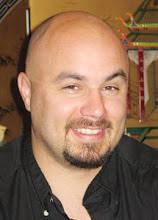
He came home from the army in 2001 a depressed and broken man, but by the time he graduated from KSU, he was so much healthier in mind and body. He was looking good, feeling good, felt he had a future. I think he was at his handsomest in that year of 2003, and my favorite photos of him are from that year.

It was also the year in which he met J. and was so very much in love, and I'm sure that also helped account for his happiness and glowing good looks that fall, though in this cute picture, he had not yet met her.

It was taken in the back yard of our old stone house. He was acting silly with the tassel on his graduation cap, blowing on it and letting it settle on and tickle his nose. I love the look on his face, looking at the tassel as he gently blows on it, the ends of it splayed around his nose, and that hint of a smile with the cute dimples just showing. How I WISH he could have continued to be that happy, whimsical, silly man. 

Thursday, August 27, 2009

Leif's Essay on Freud and His Own Personality Development - February 11, 1994


Leif started taking classes at Kansas State University when he was in the spring semester of his senior year at Manhattan High School and continued at KSU after graduating from MHS in May 1993. This is an essay he wrote for his Human Development class in the spring semester of 1994 when he was 19 years old. I think it is revealing of some of his feelings about a couple of the moves he made as a military "brat" and how he molded his personality to fit the environment in which he found himself. It would be interesting to see what he would think today, or at the end of his life. He always remained vitally interested in psychology and personality theory, and he might have majored in psychology instead of general social sciences if he hadn't had to take math, which he hated, like statistics.

Leif Garretson
HDFS 110
February 11,'94

For this assignment I would like to discuss the various aspects of Sigmund Freud's psychoanalytical/psychosocial theories of development. I find that Freud had a unique and brilliant, but simultaneously narrow and simplistic, insight. His description of the human psyche in terms of the id, ego, and superego, rings true and explains a large percentage of one's personality.

However, Freud's intense concentration on the libido as the sole motivator is unrealistically unilateral. According to Berk (1994) Freud states that the ego develops as a mechanism for satisfying the demands of the id within the confines of reality. Later the superego develops as the conscience that further inhibits the desires of the id. I agree with Freud about the structure of the psyche, however, I do not believe that the child's personality has completely formed by age five.

I have had opportunities to change my personality dramatically much later in life. This, I believe, is due to the fact that growing up as an army "brat" I had my environment changed dramatically every few years. In my opinion, the most profound of these changes occurred immediately following my freshman year of high school, at approximately age fifteen. I had been living in an upper-middle class suburb of Chicago, known as Highland Park. Highland Park was a predominantly Jewish city with a very exclusive social structure. The people that had grown up there and already had long-standing relationships formed their own groups that were virtually impenetrable. I found that an outsider like myself could not break into one of these cliques and became as inconspicuous and introverted as possible.

In contrast, after moving to Puerto Rico I found that I could leave my old self behind and become whoever I wanted to be. I responded much differently. In Puerto Rico I was regarded as something exotic and changed my entire behavior dramatically. I began to wear nicer, less ordinary clothes; I became much more confident and assertive. I began to make lasting friendships that I had not made in the past. I began to do all the things that I never would have dared in Highland Park, including developing a "rep" for being a flirt. The person that I became in Puerto Rico, and for the most part remain today, is the antithesis of the invisible army "brat" that I was prior to the move.

In my opinion the Freudian theory of development can be very helpful as a model for therapeutic reference and is a good base for psychoanalysis. However, it gives explanations for only a few aspects of human development. It suffers from an extreme overemphasis on sexual impulses. Freud seeks to explain all of human behavior through sexual impulse, an approach that is inadequate and rather narrow-minded.

The psychosexual stages are an excellent map through the human psyche which tells us how the mind itself learns to deal with the world. They give a working explanation for certain adult behaviors and are extremely useful for psychotherapy. On the other hand, they are ineffective for defining all but a small number of personality traits. The concept that a person's personality is established by the age of five is absurd (Berk, 1994).

Freud's work was and is essential to the development of both the disciplines of psychology and human development. "His psychsexual theory was the first approach to stress the importance of early experience for later development." (Berk, 1994). His theories are important and must be understood to grasp a large potion of developmental thought. However, they should not be taken as the "Gospel."

[Berk, Laura E. (1994) Child Development, (pp. 14-15) Boston: Allyn and Bacon]

-----------------------

At the time he wrote this, he probably still had his long hair, but he was required to cut it to keep his job. He was working at Aladdin's Castle in the Manhattan Town Center Mall. When he got the job, he had long hair and the management had no problem with that, but then it was purchased by a new owner (Japanese I think) that required employees to have short haircuts and he cut his, I don't know just when that change occurred but this picture was taken on the day of his marriage to Nikko, October 20, 1995.

Monday, July 20, 2009

Leif & the 2002 Black Dodge Stratus Coupe - February 2003 to December 2005


While Leif and Nikko were at Fort Drum, they also owned a used white sports car that Nikko drove, and later Leif did manage to find and purchase another used RX-7, which was what he had when he came back from the Army in May 2001. He drove it until it "died." That is, it wasn't drivable and would have required more expensive repairs than were feasible. Leif didn't have the money to either fix it or purchase a new, or even used, car. He was in his senior year at KSU and living on his GI Bill stipend and the small amount he earned as a school crossing guard. He sold the RX-7 to a father and son who were looking for a project car they could work on together. I think he got about $600 for it.

Leif needed a car and would soon need one to get to and from another job. He was looking into trying to get a loan and finance purchasing one. We had inherited some money from Peter W's mother and we decided that rather than have Leif go further into debt (he still owed us a lot of money and was still paying off debts he also incurred while in the army), we would loan him the money to buy a car, with some limitations on what we would be willing to pay for. Leif was very appreciative and went car shopping at all the dealers in Manhattan. When he had some ideas of things he might like, we went to see them with him.

The one we all liked best was a new 2002 black Dodge Stratus Coupe. It was a very stylish car and seemed to fit Leif well. That was when Peter W. went into his best bargaining mode. He was so good at it that he had Leif really fooled that he if he didn't get the price he proposed, he was going to either go elsewhere or get something used and cheaper. However, he managed to get exactly the deal he wanted and we left the lot with the car for $19,999 including taxes and registration. Leif looked great in that car.

While he was proud of having his first new car and liked the looks of it as well as the cushy interior, he said he missed the handling and rear wheel drive of the RX-7 and still vowed that someday he would have an RX-8.

When Leif moved to Florida in March 2005, he drove the Stratus to Florida in a caravan with us and parked it in our garage. He only had the Stratus for less than three years and hadn't really even begun to pay us back much on it when he had an accident on his way to a date in Tampa. He called me from the scene. I was in Kansas at the time and about to get on a plane in a day or two to head for Florida for Christmas. I think the accident was on December 23, 2005. Luckily, he wasn't badly injured, but he did have some whiplash injury from it and his neck continued to bother him the rest of his life.

As I remember, the accident happened because another car swerved into his lane just as he was coming to a traffic light. To avoid getting hit, he hit the accelerator and shot into the intersection, but instead managed to hit another car. Since he had gone through a red light, he got a citation for that and it raised his insurance. He struggled with high insurance rates all of his adult life due to the accidents he had.

I didn't see the damage to the car, but it was totaled. He hadn't even had it long enough to pay for it and it was gone.

The photos of the car were taken by him in 2005 in Florida. The one of him by the car I took of him in front of 210 N. 9th Street in Manhattan, Kansas the spring of 2003. Since we made the loan to him as one of his graduation presents, I've included a photo of him after the Commencement ceremony at KSU on May 18, 2003, with Peter W. and me. The top photo is a self portrait of him in March 2003.

Wednesday, July 8, 2009

Leif's Nineteeth and Twentieth Homes - Manhattan, Kansas - August 2001 to March 2005


When Leif moved out of the old stone house for the third time in his life, in August 2001, he moved into the first floor of a small house on 11th Street in Manhattan, Kansas, where he shared the place with a college student named Bonnie. It was the first time he'd had a female "roommate" and he said she was "perfect" for him because while they got along great and she was a good companion, he had no interest in her romantically. Leif lived better with someone, and although they lived like messy students, the two of them would set aside time to clean up the place together. Leif wasn't much on cleaning alone, but if someone else was there working with him, he would get busy and get things done. Companionship meant a lot to him.

It was a small place and he had moved back to Kansas with an apartment load of stuff he'd had during his marriage (though at this time he and Nikko were still legally married, she had left him a year earlier). Other than what Nikko came and picked up, a lot of his things were stored in the garage.

He had the place with Bonnie during the 2001-2002 school year and then she developed a brain tumor and wasn't coming back. He decided he couldn't afford the apartment by himself on his GI Bill and small salary as a school crossing guard employed by the Riley County Police Department, but the basement apartment, which was really tiny and crowded, was available, so he signed a lease on that and moved himself downstairs.

It was about that time when Peter W.'s mother, Ellen, fell and crushed her femur. By July 2002, it was clear that she was dying of complications due to years of undiagnosed and untreated diabetes which made healing of her leg impossible. She had been living for five years in a house we bought for her at 710 N. 9th Street in Manhattan, on the same city block as our old stone house, and because all of her things were in the house and we didn't want it to stand empty, we asked Leif to break his lease and move into the 9th Street house. We paid the fee for the broken lease. The house was a far nicer place to live than the cramped basement apartment but since we owned it and it was just around the corner from us on the same block, he also had to put up with our complaints about how he took care of it and mow the lawn. I had all my stock of books over there in the large basement, and had to go there to get books to sell, so I was in the house frequently (but always well announced). It also made it easy and convenient for Leif to walk over to our house for dinner at least on Sunday nights, and sometimes during the week, or for help with his Spanish, German or algebra homework.

Ellen died on September 22, 2002, just over two months after Leif moved into the house. It took me the better part of a year to sell and give away her belongings and he was very tolerant about me coming over there to work on that and have garage sales.

It was a great place for him to live, with a large living room-dining room area, nice kitchen, two bedrooms and bath upstairs and a full basement. Here he could spread out all his things, work on projects such as the fifty-pound chain mail shirt he made, the wooden guns he designed, cut out and sanded, and much more.

It was also where he lived for a few happy months with J. and her daughter, probably the happiest months of his life.

The 9th Street house was where Leif lived until we moved him to Florida with his dad. We started taking trips to Florida to see where we might like to settle. I think the first one we took was to the Tampa area and up the northwestern coast to the panhandle in March 2002. It was there that Leif rented the white Mustang convertible for a day and fell in love with the Tampa Bay area, especially St. Petersburg and Clearwater. He was just beginning to recover from his depression, as I think you can see in the photos of him above, taken in February 2002. He hadn't yet graduated from KSU or met J. yet, and he was beginning to have hope for his future again.

We continued to make trips to Florida during spring break when he was out of classes at KSU and Peter W. wasn't teaching German at the high school or middle school, looking for the right community for us. Once Leif had gone through the elation and heartbreak of his relationship with J., and found he was miserable in Manhattan where job prospects for a college grad (a dime a dozen in Manhattan) were dim, he was anxious to leave, needed to get out of there to survive. He and Peter W. had nothing holding them in Manhattan, once Peter W.,'s German teaching job was eliminated and Ellen was no longer living, and both of them wanted to move south for their health. Both of them suffered from SAD, seasonal affective disorder, and Leif suffered from cold weather asthma. Peter was miserable with allergies to Kansas plants. They wanted warmer climes and needed them.

The fall of 2004, we planned a Thanksgiving trip to Florida, and although Leif was going with us, I think he had given up on moving there with us because he wasn't willing to wait until we did it. At that time, we were planning to wait another four years to make the move. There was a variety of reasons, but some of them were my job, my publishing adventures, my mother, who I refused to leave alone in Kansas, and all that we had to do to get ready for such a move . . . plus we hadn't found the right place to move to yet. Leif felt he couldn't wait another four years and he couldn't afford to move that far on his own. At that time his friend Michael was living in Tulsa and he had visited him there. He decided if he couldn't move to Florida he could at least rent a truck and move to Tulsa, so he put a deposit on an apartment there that fall. I think that was in late Otober.

To our surprise, during our Thanksgiving trip, when we revisited the Melbourne and Sun City Center areas to try to decide between them, we made a decision and found a house. We all liked it, and it seemed like the right decision to go ahead and buy the house. One of the considerations Peter W. and I took into account was Leif. We felt it was critical to give him a chance at a new life in the place he really wanted to be. The town we were moving to wasn't his ideal place, a retirement community with no young people, but it was near many places that were full of them, particularly Tampa and Brandon, near his beloved St. Petersburg, and in a growing job market. We bought the house in December 2005. Leif canceled the apartment in Tulsa and lost his deposit, but gained the opportunity to move to warmer, sunnier climes.
------------------------

The photo are:
1 & 2. Leif in Manhattan, Kansas, February 2002, with and without glasses, which he wore for distance vision only.
3. Leif on Bellaire Beach, Florida in March 2002.
4. Leif on a beach in Florida, March 2002.
5. 720 N. 9th Street house in Manhattan, Kansas where Leif lived twice, once briefly with Nikko from about March to July 1997, and then again from July 2002 to March 2005, a few months of which he lived there with J. and her daughter.
6. The house on 11th Street in Manhattan, Kansas, where Leif lived on the first floor with Bonnie for about nine months and alone in the basement apartment for about a month from August 2001 to June 2002.

Tuesday, July 7, 2009

Children, Happiness, Parables, Poems and Life


When I was in graduate school at the University of Hawaii, one of my professors told me that I would have a hard time with the empty nest syndrome when my sons left home because I was so close to them and involved in their lives. They were then ten and sixteen. I told him I didn't think so, that I had raised them to become independent, that I wanted them to lead their own lives, that I had much to do in my life, too. All of that was true, but it was also predicated on the assumption that we would always have a close relationship with our sons throughout our lives.

For 23 years, I was basically right, though the details took on different hues. First Peter Anthony left home to go to the Air Force Academy. At first he came home for breaks and spent time with us and his high school friends, but he quickly pulled away into his own sphere, and though I realized I had lost the close intellectual exchange and camaraderie we had before, it seemed natural that he was finding new companions for both friendship and mental challenges, new horizons to pursue, and we rejoiced in his successes, as we have continued to do in all the years since he graduated from high school and left home the summer of 1987.

At the same time, we were seeing Leif blossom and come into his own as a young man with his older brother away and I continued to have a close relationship with him. It was a joy seeing them both develop into interesting, intelligent adults. My "empty nest" was delayed when Leif decided to live at home and attend KSU rather than go away to school, a decision influenced by his father's willingness to buy him a used RX-7 if he stayed there and saved the cost of a dorm or apartment, but not one I felt was best for Leif. For me, it was great. I loved having him there.

Even when he moved out with Nikko, and got married, he was still close by and in frequent contact, so my "empty nest" was delayed again. It wasn't until he enlisted in the army in January 1998 that he left and went far away for three and a half years and began to pull away from the closeness we'd always had, and I think it was partly the lack of the contact and closeness that kept me unaware of just how bad things really were for him in the army, though he did tell us what happened, and expressed anger, but didn't let us know of his despair.

At the time he left, I was just beginning my publishing venture and a year later began working on a graphic arts degree, writing more, and being creative in ways I never had time for when I was a "mom" and working, so I was happy in my own new life and didn't feel as much the lack of my sons' presence, though I loved the contact we had. I think I adjusted pretty well to their adulthood and I enjoyed my time with Peter W.

I can't say it never occurred to me that we might be without either of our sons. We worried a lot about Leif because of his penchant for fast driving, with either his car or motorcycle, and his ownership of guns. Once we found out he had been suicidal the last months he was in the army, and he was so depressed when he came back to Kansas, we worried about the possibility of suicide, too. We worried about Peter A. as an Air Force pilot flying into potentially dangerous areas, and of course, we were acutely aware that other possibilities for disaster always exist, but worrying about possibilities is not the same as dealing with them. There is no way you can feel something you haven't yet experienced. Despite our worries I don't think either of us envisioned our future without our sons there for the rest of our lives. We counted on them being there the way a child counts on his parents being there. It wasn't that we ever took them for granted. We took them for integral parts of our lives.

Today we took our granddaughters, Madeleine and Aly, to the airport to fly back home and after spending four weeks with us. We loved having them here and we had so much fun together. I found myself thinking and realizing that this was how I felt when I had my two sons all those years ago, only they were my children, and I was bound to them in an even deeper way. I realized again how happy I had been then. I knew I was happy then, but I don't think I knew HOW happy, because I didn't have a way to measure it, something to measure it against. Having the girls here gave me a measure of depth, how wonderful it was to hold them in my arms, to have a conversation with them at the dinner table, to read to them, to show them new things and teach them how to do something, to have fun together at the pool or beach, to share our lives. It made me remember and realize anew how much I loved those days, those years, with our sons.

It made me think of Khalil GIbran's poem "On Children," and how well it expressed some of my feelings. I first read that poem when I was in high school, and I have remembered it all these years. I reread it again tonight to see if I remembered it well, and it is so poignant and so prescient.

Your children are not your children.
They are the sons and daughters of Life's longing for itself.
They come through you but not from you,
And though they are with you yet they belong not to you.

You may give them your love but not your thoughts,
For they have their own thoughts.
You may house their bodies but not their souls,
For their souls dwell in the house of tomorrow,
which you cannot visit, not even in your dreams.
You may strive to be like them,
but seek not to make them like you.
For life goes not backward nor tarries with yesterday.

You are the bows from which your children
as living arrows are sent forth.
The archer sees the mark upon the path of the infinite,
and He bends you with His might
that His arrows may go swift and far.
Let our bending in the archer's hand be for gladness;
For even as He loves the arrow that flies,
so He loves also the bow that is stable.


Now that Leif is gone and can no longer be the arrow shot into the future, but instead an arrow that somehow fell to earth, I mourn for him, but I rejoice that Peter Anthony is truly of the future, a futurist, who has and is projecting himself far beyond my aim.

Then I thought of the parable of the Prodigal Son. In some ways it parallels our family story, with the older son steady, stable, reliable, and the younger one wanting to take his inheritance and head for other lands, wasting it, working at menial jobs, and eventually coming home humbled . . . but received with rejoicing and open arms. Leif was received home again with joy an open arms more than once, but our story doesn't have that final happy ending. We will never be able to rejoice that he has come home again. He was never "lost" during his lifetime, not to us, and he could always come to us, but in the end, he didn't. I will always be sad that he did not. Was it pride? Was it shame? What kept him from seeking help, from us, from anyone? I suppose he would say he did, in that he tried to use his GI Bill benefits to improve his finances . . . but then spent it unwisely and eventually lost the stipend because he didn't get proper advising about what classes to take . . . and by applying for personal loans to try to cover his debts when he finally realized he couldn't pay them. Was it the loan rejections that finally discouraged him? Was he just completely unwilling to come to us again? What about all the other things he needed help with, his loneliness?

The rest of my life I will go over and over every detail about the his life, especially the last years, trying to understand, trying to find a clue to what made him come to the decision to take his life.

And through it all I will be missing him. Through it all I will be loving him.

Through it all I will continue to realize, day after day, how happy I was when my sons were young and in my care, how fortunate I was, and am, to be their mother. I will shed tears because I miss those days that will never come again, and tears because Leif is dead. I will remember those days and all the days since that we were together.

I had another realization today. I miss Peter Anthony. I miss the relationship we once had where "mom" was a "good reference book." I don't think I let myself realize how much I missed him all these years since he left home, because I wasn't "supposed to." I wasn't going to be one of those obsessive mothers who hover over their children, or one of those demanding mothers who expect attention all the time. I wasn't going to be one of those needy mothers who pile guilt on their kids. I wasn't going to be one of those mothers who mopes around an empty nest when her kid grow up and leave home. And I don't think I have been any of those things. But, I still miss him. And I found out the truth by missing Leif. I need to rejoice in Peter Anthony's life and family. They are here. They will help keep our lives full.

But there will always be two intermingling streams, the lively one of son and grandchildren, the dark, sad one of loss and grief.
-------------------

The photo is of Peter Anthony and Leif on December 25, 1981 in Sagamihara, Japan. It was Peter Anthony's thirteenth birthday.

Monday, July 6, 2009

Leif's Tenth to Eighteenth Homes - Manhattan, Kansas to Fort Drum NY and back- 1995 to 2001


When Leif left our old stone house in Manhattan, Kansas to live with Nikko, his fiancee then, they first lived in the yellow and purple house on the north side of the 800 block of Bluemont Avenue. They had a basement apartment. It seems this house, like others along Bluemont that once were nice family homes and were turned into student apartments by landlords that didn't care for the property, now seems to be boarded up and probably destined for destruction. Basement apartments in Manhattan weren't cheap. Nothing in Manhattan is, but they were cheapER, the closest thing to affordable. The apartment was unfinished, with the rock walls of the basement partly painted, but not fixed up, paneled, or anything. I don't know exactly when they moved there, or how long they lived there, but for the three years they lived in Manhattan, they lived in three different apartments, so it probably wasn't more than a year. The house was almost exactly through the block and across Bluemont from us, just over a block away, and convenient to KSU so Leif could walk or bike to classes. He was a student with part time jobs at places like the electronics department at Sears, and at Aggieville Pizza, which no longer exists. Nikko worked at a futon store in Aggieville, and later at local restaurants. I think they were married while living in this house.

When they left the Bluemont Street apartment, they moved nearly right across the street from us in the 800 Block of Moro Street, into the basement apartment there. That house was another former family home that had been converted into apartments by a landlord and had erstwhile been a "party house" with groups of students that whooped it up all night on weekends and about drove us nuts. By the time Leif and Nikko moved in there, a calmer group was living in the house. This basement apartment at least had windows that were partially above ground and could be opened. They had rock walls again, but it was fixed up a little nicer. It was still a walkable distance from KSU and Leif was still a student. To get into the apartment, the stairs went down from the back of the house, right from the yard, and they were steep and unprotected from the weather. That meant that if it snowed or we had freezing rain, they were extremely slippery and dangerous. Nikko fell down them once when they were in that condition and got terrible bruises. Luckily, I don't think she broke any bones. The landlord should have been required to cover that stairwell to make is safer.

Although the lived across the street from us, we didn't see them all that often, though they were often at our house for Sunday dinner or special occasions like family birthdays and holidays.

From there, they moved to an apartment complex on Stagg Hill on the southwest side of Manhattan and shared a two bedroom apartment with a friend to help with the rent. This apartment was a lot nicer. I remember it being on the second or third floor. If my memory is correct, this is the last place they lived in Manhattan before they got into such financial difficulties and Leif was working nights full time to try to keep up, and finally quit school and enlisted in the army.

His next "home" was Fort Benning, Georgia, where he went to Army Infantry Basic training and lived in what once were called barracks but the new facilities don't look at all like the old barracks. They are huge brick buildings. After he graduated from training he and Nikko were stationed at Fort Drum, New York and lived in a military housing area constructed in Watertown. it was a complex of apartment buildings and they lived on South Hycliff. We visited them there in the summer of 1999 before Leif went to Bosnia in the fall but apparently either didn't think of taking a photo of their building or I just can't find it.

Nikko lived there while Leif was in Bosnia, where he lived in at least three different camps. I never found any photos he took of them, but he did make a video tour of one of the bases. He was in Bosnia for seven months and returned in the spring of 2000. That was the summer that Nikko left him to go back to Kansas. Leif spent the next nine months there in misery, trying to get his asthma diagnosed and treated, sick, depressed and lonely.

He finally managed to get medically retired from the army in May 2001 and moved back to Manhattan, Kansas, where he again lived in the old stone house with us, the third time in his life, for that summer. He was in a deep depression and we were terribly worried about him and glad he was with us so we could try to help. He was one of those who should have been treated by the VA for depression and possibly PTSD, but knowing Leif, he probably never told anyone how he was feeling. Show no weakness.

He lived with us from May until August 2001, when he moved out and started school again at KSU.
----------------------------------

The photos are:
1. Leif in the fall of 2001, cropped from a family portrait.
2. South Hycliff Drive in the military housing area in Watertown, New York. I think the building Leif lived in is on the lower left on the corner, set back from the street.
3. The house on the 800 block of Bluemont Avenue where Leif and Nikko lived in the basement.
4. The house on the 800 block of Moro Street where Leif and Nikko lived in the basement.
5. One of the apartment buildings on Allison Avenue on Stagg Hill like the one Leif and Nikko lived in.

Monday, December 22, 2008

Leif's 21st Christmas 1995 - Manhattan, Kansas - Almost 21 years old.


The two Christmases that I remember Leif being happiest were when he was in love, 1995 and 2003. Leif fell in love and married young. I've already written about his marriage to Nikko and posted this photo of them on Christmas Eve 1995. They were newlyweds, both just 20 years old, and married only two months when this photo was taken. They were playful, cute, full of energy. We were all at my mother's house on Pottawatomie Street in Manhattan, Kansas, quite a crowd of us; my brother Donovan and his family, my sister Sherie and her family. I think all told there were 16 of us there. If I remember correctly, they were living in a basement apartment in the 800 block of Bluemont Street, just a block from our house. Leif was a student at KSU and working to help support them and Nikko had a job, too. I remember the jobs they had, but I'm not sure what they were doing in December 1995. They were still full of optimism and hope. How I wish all their dreams together had come true.

Wednesday, November 26, 2008

Leif's Cyberpunk Novel - A Few Comments

There is a lot of Leif in this Cyberpunk story, both in the character of Ramac, the injured operative who spends all his time plugged into the net looking for a carrier of the virus that can cure him, and in the character of Greye Sinclair, the twin who felt like half of a pair, grieving without being able to show it, for his brother.

Leif was physically and emotionally damaged by his military service and the end of his marriage, and came home to spend a lot of his time on the internet and playing combat games online. He was now half of a pair, having lost his wife, and felt alone and incomplete.

There are some poignant phrases in the story, such as this one from Chapter One:

"It is easier to feel for someone else than it is to grieve yourself?"

He wrote it as a statement but put a question mark at the end, probably intending to write, "Is it easier to feel . . . . " It's a revealing phrase as well.

Leif said that men were allowed only one emotion, anger, and thus he could not grieve or show his own emotions at the time he was writing this (and later), but he DID show other emotions; depression and apathy.

Although Leif talked to me quite a lot about this story in the summer of 2001, I don't know how he planned to go forward with the Greye Sinclair character and how it would eventually intersect with the story of Ramac. I wish I could remember more of what he told me, and I wish he had finished the book.

Writing can be very cathartic, and I think writing as much as he did of this story was helpful to him. When he got into school at KSU in August 2001, he began to find new contacts and reasons to live, and the novel fell by the wayside.

I urged him to finish it, and to be sure it was backed up, but he had lost the urgency of writing it as his own mind and body began to heal. Despite that, he knew the story had some power, both for him and potentially for others, and I think he was proud of it, which was one reason he posted it on the ZAON forum, but no one commented on it there, and that may have been a disappointment to him. Who knows? Perhaps if he'd had more encouragement from others who read it, he might have continued, though that would have surprised me, as writing was never one of Leif's preferred activities.

Regardless of all that, I'm glad to have this piece of his writing, and the few others I have.