Showing posts with label machete. Show all posts

Thursday, July 2, 2009

Leif's Eighth Home - Fort Buchanan, Puerto Rico - July 1990 to July 1992


In the summer of 1990, we moved from Fort Sheridan, Illinois to Fort Buchanan, Puerto Rico, a small post on the outskirts of San Juan but still quite inside the larger city area. The city of Guaynabo was outside the post gate, and we were in a large metropolitan area. We lived in field grade officer quarters that were single family homes on a loop road up a hill. Our quarters had a large half circle back yard ringed by 29 coconut palms. It was lush and beautiful, but the lawn was so spongy and thick it was very hard to mow. Leif had that job and it was a hot, sweaty one which he did not enjoy. The coconuts grow in large clusters like grape clusters and are very heavy with the big husks that have been removed by the time you see them in grocery stores in the US mainland, and if they fall on you they can injure or kill you, especially since they can fall all at once. People soon learn not to park their cars under a bunch of coconuts, too.

Leif also learned to use a machete to clear brush around the yard, and he was good a loping off the end of a coconut so he could drink the juice. I once looked out the window an saw him stripped to the waist after mowing the lawn, with a coconut impaled on his machete, holding it up and literally pouring the juice into his mouth from above. With his tanned skin and long hair, and muscular body, he looked like Tarzan out there. I wish had I gotten a photo of that, but he refused to pose for me once I got the camera.

There was also a big mango tree at the far edge of the back yard. Mangoes are delicious when properly ripe, but when myriads of them fall to the ground and spoil they smell like turpentine.

From time to time, a small flock of blue macaws would fly over about five a.m. making a fearful racket. They were beautiful to see, though, so we didn't mind. Less edifying were the rats that ran along the electric wires and up the palm trees, and tropical roaches are enormous. Luckily we never had either of them infest our house.

The house was made of concrete block. When we were there, the quarters did not have central air conditioning. Instead, the screen was on the inside and the windows (except for the big picture windows) had no glass and the outside of them were aluminum louvers that could be opened at any angle or closed. You could open up the house and let the breezes blow through. The trouble with this was, those of us coming from the north couldn't take the heat and humidity, and neither could our belongings. Without AC, everything soon got mildewed. So, in those days, we bent one or two of the louver frames outward, took out the screen, and installed a window AC to cool the place and lower the humidity. Then we had to cover the screen on all the other windows with clear plastic to keep the AC in. Leif helped install the air conditioners.

His school was just down the hill, but to get there you had to take a trail through want amounted to a tropical jungle. He attended Antilles High School for his sophomore and junior years of high school. I've already posted photos and accounts of what happened when he tried to be on the soccer team, how he became a certified SCUBA diver and helped do underwater cleanup, and how he was in the musical "Grease" playing the part of Kenicke. He also had a small part in "Guys and Dolls" the precious year. I've also written about the guitars he had, including the one he designed and made while in Puerto Rico, the band he played in for a short time, and his friends. I don't remember the names of all of them, but I do remember Lenny, Ricky, Jill, Rebecca, Janice and Clarissa very well, and his guitar teacher, Edwin Santiago.

When Leif first got to Fort Buchanan, he had some difficulties. Antilles High School was an American school on a U.S. Army base, but most of the students were children of people working for various civilian federal agencies like the Treasury Department or the FBI, and most of them were Puerto Rican. This meant that although the classes were all taught in English, during breaks and after school, most kids were speaking Spanish. Despite his abilities Leif never really learned Spanish and his friends were mostly children of the "norteamericanos." During his first few days of school, he got "tested" as the new "gringo" and was attacked and beaten by some of the locals on a pretext. One of them hit him in the face with a ring that made a nasty cut and bruise. I caught him one day heading to school with a pair of nunchucks stuck in the back of his waistband and told him he couldn't take them to school. He said he needed to defend himself. He knew how to use them, and I was afraid he would injure or kill someone if he tried to defend himself with them. I insisted he would have to either find a way to get along or we would talk to the school about the situation. I think that was when Leif learned the macho walk, the intimidating carriage that made people think he was not to be messed with, and when he began to formulate his belief that a man should show no weakness. He had no further trouble with those guys, but to my knowledge, there was no more fighting.

Inside the house, we had a small kitchen, a large dining room-living room combination, a kind of enclosed porch we used as an extension of the living room, and three bedrooms. Leif's was decorated in his favorite black-and-white color scheme.

We saw as much as we could of the island of Puerto Rico, from the beaches to the mountains, from the cities to the countryside, and while there, we also took trips to the U.S. Virgin Islands and a Carnival cruise to the Caribbean. We especially enjoyed Old San Juan and the fortress of El Morro and often shopped at the San Patricio Plaza shopping area.

Puerto Rico was where Leif really came into his own as a young man. It was where he first fell in love with Karen, who he carried a torch for for a long time. It was where he first acted and sang on stage, where he first gave parties and had a group of really great friends. We were very sorry to have to move him from there to Kansas after his junior year when Peter W. retired from the Army. It was hard for him to leave his friends behind and start over as a senior in a new place.

When he graduated from Manhattan High School in Manhattan, Kansas, his primary graduation present was a trip back to Puerto Rico to see his friends and be there with them when they graduated.
-------------------------------
The photos are:
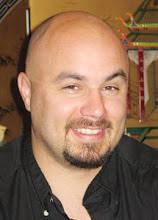
1. Leif in the spring of 1992. This photo was actually of him and Karen in a car on a date, but I cropped it to show only him. I think he looks like he could have been Puerto Rican. This was the first time he wore a beard and mustache. Note the earring and his already-receding hairline.
2. Leif in April 1992, also originally of him and Karen.
3. Leif by the sea in 1991, with El Morro and San Juan in the background.
4. Leif by the sea in 1991 with "many faces" caused by a filter Peter W. used to take the photo.
5. Our quarters (house) in October 1990.
6. The back yard of our quarters in October 1990.
7. The back yard of our quarters looking from the far end of the yard in October 1990.

Monday, April 13, 2009

What no one tells you about a death in the family.

We've all been to funerals. We've all seen them in the movies and on television. We've all seen death on the screen and some of us have seen it in person, but what none of those things show us is reality. None of them prepares you for the depth of emotion when a beloved child, or any age, dies. None of them tells you that you will be plunged into a whirlwind of activity to try to plan a funeral or memorial service, arrange for cremation, find a place for burial or inurnment, notify relatives and friends, figure out what to do about the deceased person's mail, accounts, and belongings.

Sometimes, if someone is anticipating a death or is old, there might have been some preparations made, such as a planned funeral or the purchase of a cemetery plot, but in the case of an unexpected death of a young person, in addition of the shock of their death comes the shock of everything you have to do and all the paperwork that comes with it. I found myself dealing with Leif's workplace, his insurance, his apartment complex, several government offices concerning his veteran's benefits and retired military pay, the national cemetery. I tried to find out how to let his friends know, since I didn't know all of them or how to contact them. I needed to contact his bank, credit card and loan accounts. I had to find a location to hold his memorial services and pick a date.

Because of the manner of Leif's death, I also found myself dealing with law enforcement, the medical examiner's office, the investigating detective, the sheriff's records department.

I had to keep records and account for everything so that I would know what was happening and could follow the myriad conversations with so many people I never even met.

I wanted to create a digital slide show of Leif's life so I started scanning photos by the dozens, finally coming up with the completed show the night before the memorial services, comprised of over 400 slides.

How does one create a meaningful memorial service for a man who professed to be at least an agnostic, if not an atheist? How does one create a service that honors who we really was and how we felt about him?

How does one go about cleaning out his apartment, selling his furniture, giving away his clothing, taking his carefully constructed life apart piece by piece?

That is what you have to do. This is a part of death, and that is what I found to be all-consuming. I moved forward alternating between businesslike numbness and periods when I would break down in tears.

Somehow the things that had to get done within the month after he died got done. Somehow we were fortunate and found the St. Petersburg Unitarian Universalist Church and Bay Pines National Cemetery.

Somehow we managed to clean out Leif's apartment in time to avoid paying another month's rent. Going back there was a sad reminder of the day we found him there, but eventually, it was just a place with walls; nothing of his remained.

I did what I had to do, and then other family needs intervened. I still have belongings of Leif's here that I need to sell or give away. I still get mail for him. On rare occasions, I even see someone who knew him "friend" him on Facebook or MySpace without reading his profile, not knowing he is dead, and I try to let them know.

Today is Peter W's birthday. Last year, his 65th birthday started out to be a totally unhappy and depressive day, just three days after we found Leif. Leif had always been there for his dad's birthdays, except for the three years he was in the army. We always looked forward to his being with us and now he would not be there ever again.

We were both sobbing and crying. The day was saved by my sister, Lannay, my nephew, Rick, and his wife Mac, and their two sweet daughters Kimberly and Christina. They drove all night from Washington DC to be with us, just for that one day. The girls climbed up in Peter's lap and cheered him up. He read to them. Mac cooked a great Thai dinner and I made a Black Forest Cherry cake. We managed to celebrate his birthday. I will always be grateful that they came, for their love, for the girls' charm and sweetness. They came back later in the month for the memorial services and stayed for a week to help out.

This year Peter's birthday will be less tragic, less sad. This year we can try to focus on each other. We will enjoy our time together. Leif will be in our thoughts, always, but the pain is lessened after a year. This birthday will be better than last year.
------------------

This time the photo is of me, because I'm the one who had to take hold and do all those things after Leif died, and I'm the one remembering. The photo was taken April 11, 2009 using PhotoBooth and the Colored Pencil effect.

Sunday, January 11, 2009

Leif - Fort Buchanan, Puerto Rico - Fall 1990 -Spring 1991 - Age 16


In Puerto Rico, where Leif lived from July 1990 to July 1992, Leif really blossomed. It was there that he let his hair grow luxuriously long, where he sang the part of Kenicke in the musical Grease, where he played in a rock band (briefly), took electric guitar lessons, became a SCUBA diver, designed and made his own guitar, and had a group of wonderful friends, Ricky, Lenny, Jill, Becky, Clarissa, Janice, and many more whose names I can't remember tonight.

One of these photos is a school photo, one was taken in our home, and the one where he is stripped to the waist was taken in our back yard on April 19, 1991 when he was throwing a birthday party for one of this friends. I think it was Lenny. He looked like Tarzan and he was having a blast. Note the signature Oakley sunglasses hanging around his neck, even though it was getting dark outside.

It was hard for Leif to leave Puerto Rico. Although he had some tough times when he first got there being accepted (as the new "gringo"), he made good friends and was active and involved. He fell in love the first time, and he gained a sense of himself as a virile young man.

Leaving to go to Kansas, to an unfamiliar culture (the Midwestern culture he had left behind when he was only an year-and-a-half old), and being basically an introvert until he knew people well, it was a big loss to him to leave Puerto Rico.

I love the photo of him out in the back yard with his hair flowing, looking mischievous. That's one of the ways I would like to remember him. I remember a particular day when he was out there, in our backyard circled by 29 palm trees, using a machete to clear brush. He picked up a large coconut that had fallen from one of the palms and whacked off the end of it with the machete, stabbed the machete into it, and held it high above his head, allowing the coconut liquid to pour down into his mouth. He really did look like Tarzan. How I wish I had a photo of that.

Saturday, May 31, 2008

Leif - The Purple Suit & The Sculptor - 1992


In high school, Leif became a snappy dresser with his own sense of distinctive style. When he wasn't wearing the the in-style ragged jeans and combat boots, he liked unusual styles, particularly two suites, one a sort of silver/gray the other purple, and he looked terrific in them.

This photo was taken in our back yard in Puerto Rico. Note the Oakley sunglasses, one of several pairs he owned over the years. I found one in his belongings after he died.

That yard was surrounded by a ring of 29 coconut palms and was very hard to mow. Leif got that job, and he didn't like it. However, I wish I had a photo of him out there, bare to the waist, long hair streaming, with his machete stuck into a coconut he had just lopped the end off of, holding it in the air with the machete and drinking the juice by pouring it down his throat. He looked like a very well-built Tarzan.

I chose this photo because of an analogy Peter made today. He said it's as though we had what we thought was a perfect piece of marble and spent 33 years sculpting it, and then found it had a fatal flaw that would cause it to disintegrate.

I thought a lot about that today, but the analogy isn't quite right. It's more as though we had about 20 years to sculpt the beautiful statue, and then had to put it out into the public garden, where vandals worked for years to destroy it and finally managed to do so.

I say that because Leif suffered greatly. He was betrayed by people he loved. He was treated with terrible unfairness and cruelty in the army because of his asthma. He suffered heartbreaking loneliness and depression.

Although the rest of Shakepeare's speech doesn't fit, the line "he loved not wisely but too well" certainly fits Leif. He had great love to give, but he chose unwisely and those he loved broke his heart.

Leif had flaws. They contributed to his loneliness and depression, but as I learn about depression, I see that many of those flaws were symptoms of it.

Yet in so many ways, he WAS the beautiful statue, the beautiful mind. He was brilliant, though he never found a focus and sense of purpose for that mind. He was handsome. He was kind. He was funny. He had a social conscience. He cared deeply about his country.

When this photo was taken, he could have been a model, posed for the cover of romance novels, but although he dressed the part, he never had the artifice to be the ladies' man . . . and indeed, what he really wanted most of all in life was a loyal, loving soulmate, the protector of his heart.

How I wish he had found her!