Showing posts with label science. Show all posts

Tuesday, August 27, 2013

Leif's Junior High School Yearbook 1988-1989

 While looking in a "tea box" trunk the other day, I discovered a couple of Leif's yearbooks, one from Northwood Junior High School in Highland Park, Illinois, where he attended sixth through eighth grades, and one from Antilles High School in Puerto Rico. I found myself wondering if he had others. Surely he would have gotten yearbooks for all of his high school years, but so far I have not found them.

I think that junior high was in some ways the best time for Leif. Although he was a gangly adolescent plagued by severe acne, about which he was very self conscious, I learned in later years, and he was a quiet kid without a large circle of friends, the friends he did have were good ones and he enjoyed them. He wasn't yet sadly disillusioned about his ambition to be an Air Force pilot because he hadn't yet discovered that his eyes would not pass the flight physical.

He did some of his very best school work in junior high because he had excellent and challenging teachers who offered him assignment possibilities that interested and engaged him, not the usual "report" stuff. It was in junior high that he built the huge chlorophyll molecule I already wrote about, and where he did such good work on medieval armor, loved reading and doing non-traditional reports on Douglas Adams' books and Orson Scott Card's Ender series.

He also showed his incredible mind for science, and did two complex science fair projects using his remote controlled cars (which he naturally built himself). I wrote about those before, too. His eighth grade science fair project went all the way to the state science fair, where it won an honorable mention. I think it deserved even better.

So, it was with interest that I discovered in his eighth grade yearbook that there was a science fair page with him on it as one of those who went to the state science fair.

It's a terrible shame that someone didn't take Leif under mentorship in science. He had a terrific mind for it, and would have made an excellent scientist. What held him back was the knowledge that math was necessary, and he didn't like it . . . probably because it was one of the two only things he actually had to work at (math and foreign languages), and the fact that no one gave him any kind of career guidance about what a science major could do besides get a PhD and teach or be a "lab rat," as he put it.

Perhaps if he'd had some good career guidance and found a new passion to replace what he had lost, he would have found direction in life.

What struck me about this yearbook was how really little of Leif is to be found in it. Some yearbooks are a rich source of information, in the activities a student pursued, in what friends write in the book, for instance. But only three people wrote in Leif's book, and they weren't even his good friends. This leads me to believe that Leif didn't offer the book to anyone, really, and that those three who did sign it must have seen it with him and asked to sign.

There's nothing in the book about the Leif we knew other than the science fair . . . nothing about how he played the electric guitar, was photographer, participated in the track and field events in shot put and javelin, how he played soccer (and was quite good in the back field), how he loved cats, cars and Cindy Crawford, Star Wars, and music. None of that is anywhere to be found. He seems only like a kid who didn't participate, sadly enough.

And yet, I don't think he ever did school work as creatively as he did in this school. I wish he'd had teachers like this in high school and college. I wish there were more of him to see in this yearbook.


Sunday, August 16, 2009

Leif's Science and Society Paper #2 written in the fall semester 2007


Leif Garretson
10/31/2007
Science and Society paper #2

When considering the scientific validity of a hypothesis we must examine it for a few key characteristics. These characteristics are things which are either empirical in nature and which can be definitely demonstrated to be true or false, or they are constantly changing to accommodate new data. This difference or criterion was best summarized by Karl Popper when he said, “ One can sum up all of this by saying that the criterion of the scientific status of a theory is its falsifiability, or refutability, or testability. In the simplest of terms this means that if the theory cannot be definitively proven to be either true or untrue its is not scientifically valid.

Popper came to this conclusion after analyzing the theories of his contemporaries such as Einstein and Adler. In the case of Adler the conclusions he drew could not be clearly proven to be correct or false. His theories of human motivations could be so flexible as to be congruous with any human behavior. No matter what he witnessed it always made sense within the tenants of his theory and there was no conceivable human behavior, actual or hypothetical, which could conclusively demonstrate him to be wrong. No matter what happened Adler could explain it within the framework of his model. Popper would claim that this is not true science but pseudo-science as it cannot be falsified by any event.

By contrast truly scientific theories could be proven false if certain events were to take place. For example, we take for granted that gravity exists and will act on all bodies, pulling them towards the earth unless some other force acts to prevent this. However, if hypothetically we were to witness an object levitating in mid air without the assistance of some other force, we might be forced to reconsider the validity of the theory of gravity. Regarding gravity, Popper gives great credit to Einstein and his predictions about gravity and light as they were bold, risky and could have clearly been proven to be false if he was wrong.

In Einstein’s case, he claimed that strong gravity wells such as our sun could actually bend light by changing the path of incoming photons. When he made this claim there was no easy way to demonstrate this but later a scientist named Eddington discovered that if you photographed constellations around a solar eclipse and then compared those photographs to those of the same constellations at night without the sun's gravitational field in the way you could measure the distances and prove or disprove Einstein’s theory. In this case Einstein was correct but had Eddington’s work not demonstrated this phenomenon Einstein’s theory would have been falsified. The fact that this possibility of falsification exists for Einstein’s Theory but does not for Adler is the criterion which, at least to Karl Popper, separates science from pseudo-science.

Popper describes such pseudo-scientific theories as being derived from ad-hoc hypotheses. Ad-hoc is defined as, “Formed, arranged, or done for one particular purpose only.” Such hypotheses are so malleable as to be beyond reproach and thus are impossible to truly prove or disprove. Pseudo-scientists with Ad-hoc hypotheses can always amend the hypothesis to account for any data which seems incongruous with the original model. One such example is Ptolemy and his geocentric model of the solar system. His hypothesis was sound until it was falsified by the existence of retrograde motion. However, instead of abandoning the theory he added the rather ad-hoc hypothetical model of epicenters to explain the unexplainable. The truth about these epicenters could not be clearly proven or falsified for hundreds of years.

This brings us to the topic of James McConnell and his theory of the chemical transference of memory. McConnell conducted experiments on Planarian worms involving training them to respond to bursts of light by first using Pavlovian conditioning involving a corresponding electric shock. He first trained worms to scrunch up when stimulated with a burst of light they had come to associate with being shocked. This, in and of itself, is unremarkable, but when things got interesting is when he began cutting the worms in half. Because Planarian worms regenerate you can cut one in half and get two [living] worms. One half retains the brain and one does not.

One would assume that if memory is stored in the brain that only the half with the brain would remain trained to respond to the bursts of light and the other half would not respond. This, however, was not the case and warranted further study. He followed this experiment by feeding the untrained cannibalistic worms the flesh of trained worms. He then reported that worms that ingested the meat of trained worms were 50% more likely to respond to the bursts of light.

Critics and contemporaries of McConnell were unable to replicate his results. This is often a red flag for any theory as it’s repeatability is of key importance to its credibility. McConnell would claim that it is a case of "golden hands" as he simply has more experience in training worms than anyone else. This is further challenged by the fact that other possible explanations are offered, such as the presence of slime trails from previously conditioned worms passing information on rather than chemical memory.

Here it is difficult to say if his further experiments are merely ad-hoc or are legitimate examinations of potential alternatives. Initially scrubbing the troughs and removing the slime produces no results. He concludes that the worms don’t like the scrubbed troughs, which seems very ad-hoc. Popper would surely liken this to Adler’s explaining away of anything that did not seem to be immediately in sync with the base model. McConnell attempts to eliminate this variable by using naive or untrained worms to pre-slime the troughs so that he can test cannibal worms for chemical transference of memory without them being affected by either the slime trail of the trained nor a hostile environment.

Still, all of this remains rather inconclusive. McConnell’s experiments are never successfully repeated by others, nor can they be conclusively demonstrated to be false. This very fact would, according to Popper, make this pseudo-science.

Again, the criterion of scientific status is whether it is falsifiable? In this case it is at least conclusively not. Is it refutable? It also cannot be conclusively refuted. And lastly, is it testable? While McConnell himself claims to have successfully tested the theory, the fact that it has not been repeatable by any others greatly strains its validity as a truly scientific hypothesis, as opposed to a mere guess with ad-hoc explanations to account for anything inconsistent between the predictions and the data.


Leif liked the intellectual exercise of philosophy and the challenge of argument, but he didn't really like to write his analyses. He would much rather have passed an oral exam through a spirited discourse. Our academic system isn't set up for much of that, and when he got it, it loved it.

He didn't send either of these papers from his Science and Society class to me and I didn't see them until recently among this computer files. He didn't find them as significant personally as the final exam in his other class, the one he sent to me and eventually left on the "desktop" of his laptop computer the night he died.

Leif claimed many times to be ruled by reason, but I think he failed to allow himself to see how often reason is colored by, even directed by, emotion.
---------------------

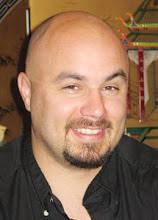
The photo was taken in the living room of our old stone house, probably sometime around December 2003. He is wearing his leather motorcycle cap and jacket.

Saturday, August 15, 2009

Leif's Science and Society Paper #1 written in the fall semester 2007


Leif was trying hard to find a way to have more income and enrolled in USF (University of South Florida), which was not far from where he lived in Tampa, for the fall semester 2007. He took two philosophy courses. One was "Science and Society," for which he wrote two papers. This is the first one:

Science and Society paper #1

Do facts and reason settle scientific controversies or are they determined by popular convention and the ability of the scientist to persuade the scientific community and/or the public at large? That is the underlying question we must examine when considering the interplay of science and society. Many scientists would argue that the nature of the universe is absolute, filled with facts and truths which cannot be disputed and the purpose of science is to discover those truths. Such scientists, Giere for example, claim that it is facts and reason which will decide the result of a scientific controversy and that such a pursuit is objective rather than subjective. By contrast others, such as Collins and Pinch, argue that facts and reason have little to do with the way that controversies are decided and that in almost all cases it is popular opinion and convention which determines what view or result is accepted as the truth.

To examine this let us review the competing experiments of Louis Pasteur and Felix Archimede Pouchet regarding the issue of spontaneous generation. Throughout the study of biology and theology there has been a question of life’s origins and whether life will spontaneously generate if the conditions are right. Before we can explore the societal influences and implications of these experiments let us first examine the experiments themselves.

We begin with a real world observation that there are living things and these living things' origins cannot always be readily apparent. The basic question is, does life only come from other life, or is it possible that, given the right conditions and requisite materials, life could spontaneously appear without an external source? Herein lies the model they are proposing: that if organic, but inert matter is left alone in the presence of air that life will spontaneously generate.

Now we come to the Data. In Pouchet’s experiments 8/8 samples became prurient certainly suggesting the model is correct. However, in Pasteur’s study only a small percentage of them cease to remain inert suggesting that the model is incorrect. Respectively, each one has made a prediction of the outcome but those predictions are opposite each other with Pasteur predicting no spontaneous generation and Pouchet predicting there will be spontaneous generation. Now this case is interesting as both scientists got opposite results but when they compare the model with their respective data, each data set supported the predictions they had made. When comparing their work it became obvious that both could not be right so what made the difference?

When examining the experiments we must ask are their any other plausible explanations for the data? Particularly when the data is contradictory we must theorize another possible model to explain the disparity. In Pasteur’s case he examines the two methods and focuses on the fact that when obtaining their “sterile air” at high altitude his method was to snap off the end of the bottle with pincers and heat as to keep a sterile sample. Pouchet used a file on the necks of the sealed containers and Pasteur claims this is the critical error. According to Pasteur it is possible that the file could have allowed small pieces of glass to fall into the sample and those pieces of glass which had been exposed to an open and contaminated environment, might have and must have, carried some microbes into the sample contaminating it and ruining the experiment. According to Pasteur had this mistake not been made Pouchet’s results would have mirrored his.

Looking at merely the results there are compelling reasons to agree with Pasteur’s assessment but even his views were flawed as his initial experiments also became contaminated. It is clear that both scientists had their own biases. If Pasteur saw a result that supported spontaneous generation he believed he must have made a mistake in maintaining a sterile sample. If not he assumed he had proved himself right. In Pouchet’s case it’s the opposite. If he saw an inert sample he assumed he had somehow destroyed and essential property of the air which prevented the spontaneous generation. When Pouchet saw prurient samples he did not consider accidental contamination but assumed he had proved spontaneous generation was a fact.

Beyond the inherent flaws of the two scientists and their personal biases there is also the awarding commission which essentially decides what is scientific cannon to be held up as truth. While Pouchet would likely argue that they had a personal bias to support the more popular and connected Pasteur, there are larger more significant underlying factors in their decision to support Pasteur and his findings. To understand this we must ask the question: Were there any compelling reasons, in the 1860s, for preferring one model over the other? One cannot look at these events without considering the context. In 19th century France, which is a predominantly Roman Catholic nation, the significance of these experiments was profound. This period saw the beginning of the unending battle between Charles Darwin’s theory of evolution and the traditionally accepted Christian story of creation. Scientist or not, devotee or not, a Catholic was compelled by faith or convention to accept the idea that mankind and life on Earth exists as the result of the direct action of God and not random chance. The Theory of Evolution is still widely challenged and certainly not universally accepted or popular as it contradicts the literal story of creation.

What this means is that were Pouchet’s model to be proven correct it would strike a blow in favor of Evolution, further suggesting that Mankind may have simply evolved from microbes and maggots which spontaneously generated themselves out of a pile of organic matter. This contention, by extension, would suggest that the story of creation was false, or at least potentially false, and furthermore could be used to argue that God himself might not exist as life could have created itself. By contrast Pasteur’s experiments which seemed to disprove spontaneous generation are in line with current thinking and support the far more popular and accepted world view that mankind and all life was created by God and could not simply happen at random.

So while we can now look back on this and say that Pasteur was right and that Pouchet‘s experiments obviously had flaws in them, was that really what decided this controversy? The answer, at least in the short term, is no. Popular opinion and popular support for Pasteur himself undoubtedly contributed to the acceptance of his conclusions. Collins and Pinch would have us believe that this is always the case and that facts and reason are irrelevant. Giere on the other hand would certainly argue that what matters is that Pasteur was right, as were his methods, and the fact that it coincided with popular opinion was coincidental. Giere would argue that in the end the truth wins out and had Pasteur’s conclusions later proved to be false upon further study, the truth would prevail in the end.

An excellent example of this can be observed in the comparisons of the Geocentric and Heliocentric models of our solar system. For more than a millennia Ptolemy’s Geocentric Model of the universe was accepted as fact. It was in line with popular opinion and there was not a better model to explain what had been observed. It was not until Copernicus and Galileo came along with the heliocentric model that this opinion changed. Now in support of Collins and Pinch, even when this superior model was suggested Galileo was persecuted for his assertions at first. However in support of Giere, Galileo was later proven correct and his conclusions won out in the end as popular opinion shifted.

So in conclusion, are Collins and Pinch justified in their claim that facts and reason do not settle most scientific controversies? Or, in other words, who is right? Giere or Collins and Pinch? The answer lies in how you define the word “settle.” Collins and Pinch are correct in all of their assertions that persuasion and popular opinion are more important in determining what theory or conclusions are accepted, at least in the short term. But does that mean the controversy is settled, or merely that one side is winning the battle? At any given time or place whether a thing is believed to be true is just that, a measure of how successful you are at getting people to believe you are correct. What people believe is what defines their reality and if an idea conflicts with their perception of reality they can readily ignore or reinterpret data which does not conform to their world view.

Thus while Collins and Pinch are correct, they are short-sighted in their conclusions. I would argue, as would Giere, that any conclusions, models, theories, or assertions which by chance or coincidence are not actually true from an objective view will not stand the test of time, e.g. they are not settled. Therefore what Collins and Pinch claim is relevant in the short term and important to note when separating good science from bad; societal acceptance of bad science does not negate the existence of good science. Scientists often face the challenge of changing public opinions and beliefs. History is full of flawed theories either from bad science, or good science which simply had incomplete information from which to form their models and hypotheses. These are followed by other examples of better science succeeding and superseding them. In any case few things can ever be absolutely proven and while popular belief both in the 1860s and today says that spontaneous generation does not happen, it is plausible that such a phenomenon could exist and we simply do not yet understand the exact conditions which are requisite for such genesis. Collins and Pinch may be right that persuasion and popularity may determine what is accepted as truth, but in the end, when the distortions of contemporary thinking are swept away and only the facts remain, it will be the facts themselves which reveal the absolute truth.

------------------------
The photo of Leif was taken December 20, 2004 in Manhattan, Kansas.