Showing posts with label science fair. Show all posts

Tuesday, August 27, 2013

Leif's Junior High School Yearbook 1988-1989

 While looking in a "tea box" trunk the other day, I discovered a couple of Leif's yearbooks, one from Northwood Junior High School in Highland Park, Illinois, where he attended sixth through eighth grades, and one from Antilles High School in Puerto Rico. I found myself wondering if he had others. Surely he would have gotten yearbooks for all of his high school years, but so far I have not found them.

I think that junior high was in some ways the best time for Leif. Although he was a gangly adolescent plagued by severe acne, about which he was very self conscious, I learned in later years, and he was a quiet kid without a large circle of friends, the friends he did have were good ones and he enjoyed them. He wasn't yet sadly disillusioned about his ambition to be an Air Force pilot because he hadn't yet discovered that his eyes would not pass the flight physical.

He did some of his very best school work in junior high because he had excellent and challenging teachers who offered him assignment possibilities that interested and engaged him, not the usual "report" stuff. It was in junior high that he built the huge chlorophyll molecule I already wrote about, and where he did such good work on medieval armor, loved reading and doing non-traditional reports on Douglas Adams' books and Orson Scott Card's Ender series.

He also showed his incredible mind for science, and did two complex science fair projects using his remote controlled cars (which he naturally built himself). I wrote about those before, too. His eighth grade science fair project went all the way to the state science fair, where it won an honorable mention. I think it deserved even better.

So, it was with interest that I discovered in his eighth grade yearbook that there was a science fair page with him on it as one of those who went to the state science fair.

It's a terrible shame that someone didn't take Leif under mentorship in science. He had a terrific mind for it, and would have made an excellent scientist. What held him back was the knowledge that math was necessary, and he didn't like it . . . probably because it was one of the two only things he actually had to work at (math and foreign languages), and the fact that no one gave him any kind of career guidance about what a science major could do besides get a PhD and teach or be a "lab rat," as he put it.

Perhaps if he'd had some good career guidance and found a new passion to replace what he had lost, he would have found direction in life.

What struck me about this yearbook was how really little of Leif is to be found in it. Some yearbooks are a rich source of information, in the activities a student pursued, in what friends write in the book, for instance. But only three people wrote in Leif's book, and they weren't even his good friends. This leads me to believe that Leif didn't offer the book to anyone, really, and that those three who did sign it must have seen it with him and asked to sign.

There's nothing in the book about the Leif we knew other than the science fair . . . nothing about how he played the electric guitar, was photographer, participated in the track and field events in shot put and javelin, how he played soccer (and was quite good in the back field), how he loved cats, cars and Cindy Crawford, Star Wars, and music. None of that is anywhere to be found. He seems only like a kid who didn't participate, sadly enough.

And yet, I don't think he ever did school work as creatively as he did in this school. I wish he'd had teachers like this in high school and college. I wish there were more of him to see in this yearbook.


Saturday, October 10, 2009

Leif's Giant Chlorophyll Molecule - Highland Park, Illinois - Early 1989


I looked and looked for a photo of the giant chlorophyll molecule Leif built in the eighth grade and had given up. I was sure I would have taken a photo of it, but I couldn't find it. Then, voila! I found it in an envelope.

I've written before about this project. When Leif was in the eighth grade at Northwood Junior High in Highland Park, Illoinois, one of his science assignments was to build a model of a molecule. The other students picked simple molecules but Leif was inspired. He determined to make chlorophyll, a very complex molecule with a large number of atoms of oxygen, nitrogen, magnesium, carbon and hydrogen. The chemical formula is C62H70MgN4O5, according to what is on Leif's model.

He designed it using styrofoam balls which he painted to color-code the atoms, using acrylic paint. Then he put the whole thing together with toothpicks and glue, in one sitting, refusing to even stop to eat. As I recall, it took him about five hours.

When it was all done, there was no way it could be transported to school. It was impossible to pick it up, and it was six feet long. I finally found a large carton that a filing cabinet had come in. We cut it open and used two panels of it for a backing which the two of us slid underneath the molecule. Then we fastened it to the backing and added the labels.

The next morning we loaded it into the back bed of our Maxima station wagon and I took him and the molecule to school. The kids were all still outside as the bell that allowed them to enter hadn't rung yet. The amazement on their faces when the two of us carried this giant molecule in was a delight to see.

Leif's science teacher was so impressed that she asked to keep the molecule and hung it on the wall. It was also in the eighth grade that he did the science fair project on gear ratio effect on battery life and speed with a radio controlled model car, a project that took him all the way to the state science fair.

He had such a terrific mind for science and showed such promise, it's too bad he didn't become a scientist. It was the math that deterred him.

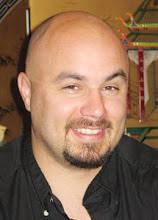
This photo of Leif was taken at about the time he constructed the molecule, in early 1989.

Wednesday, May 14, 2008

Leif's Junior High School Science Fair Projects


Leif found a way to combine his fascination with radio-controlled model cars with science experiments in seventh and eighth grades. He first designed an ingenious way to test the effect of different tire treads on battery life and the distance the car would travel on a charge. He had several different types of tires with vastly different tread patterns. It would be interesting to see how this kind of research would translate into today's world with real cars and find out how a variety to tread patterns would affect gas mileage.

In eighth grade, he got even more sophisticated, designing an experiment to measure the effect of gear ratios on speed and battery life. The RC-10 was a versatile car that could be modified in many ways, and there were many parts available to do that with. One was the gear system that tranferred the motion from the drive shaft to the wheel axle. By changing gear sizes, a different torque would be created.

Leif was a student who always insisted on doing his own work, and although there were times he did the minimal amount to get by, when he had an interesting assignment that challenged his incredible mind, he got deeply involve and produced outstanding work. Unfortunately, he was not a lover of academics and always maintained that he hated school. Actually, it wasn't school so much that he hated. It was mindless assignments and homework. Learning in class he often enjoyed, and assignments that caught his interest led to terrific work. He was fortunate at Northwood Junior High in Highland Park, Illinois, to have science and language arts teachers that really engaged his mind and he did some of his best work there.

The gear ratio experiment was selected to go on to the state science fair in Illinois, where it received a very high rating.

Friday, May 9, 2008

Leif's "First Car" - the RC-10


When Leif was in junior high school in Highland Park, Illinois, he was too young to have either a car or a driver's license, but too old for the Matchbox cars. That's when he discovered radio-controlled cars. He save his allowance and gift money to spend on them. The first kit he bought was made in China and in those days (about 1986) the "English" instructions were nearly unreadable. With his mechanical skills, he figured out how to put it together and soon had it racing up and down the street.

Of course, typical of Leif, he had to have a better one . . . and a better one. The top of the line in those days was the RC-10. It was expensive and it took him awhile to save up the money, but boy, was it fast and sleek! Not content with the "out of the box" version, he spent what seemed to be an endless amount of money on different gears, wheels, bodies, and then modified the body. You can see in this photo that he drilled numerous holes in the aluminum chassis to make it lighter and therefore faster.

The RC-10 proved to be his ticket to two outstanding science fair projects. First, in seventh grade, he designed and carried out an experiment on how different tire treads affected battery life and the length the car could go on a single charge. In 8th grade, he went all the way to the Illinois State Science Fair with his intricate and excellent experiment on how different gear ratios affected speed and distance. Perhaps in the next couple of days I'll post photos of him with his science fair displays.

The obsession with radio-controlled cars had an added benefit. Leif had always maintained he didn't like to read, and getting him to read school assignments and books for book reports usually was an unpleasant chore. However, he loved reading about model cars, sports cars and radio-controlled cars and subscribed to several magazines about them, which he read avidly.

Actually, it wasn't that Leif didn't like to read, just that he didn't like the kind of reading he was required to do. Hand him the "right" book, like Orson Scott Card's Ender series, beginning with Ender's Game, and he couldn't put it down.

One amusing thing about his subscriptions was the other mail he got because of them. Evidently the profile for someone subscribing to Car and Driver magazine, for instance, must have been for a yuppy, or at least a young man with some cash, and of age. Leif got frequent credit card offers at the age of 13 or 14. We had no success in stopping the flood of them until one night he sat down and filled out one of the applications . . . truthfully, stating his occupation as "junior high school student," and his income as his meager allowance, etc. To bad we couldn't have seen the face of whoever opened it.

I don't know what happened to his RC-10. I think he had it at least until he went into the Army in 1998, maybe even after that.

Among his things when he died was a radio-controlled car. Still having fun. Now his nephew will enjoy playing with it.