Showing posts with label grandfather. Show all posts

Friday, June 17, 2011

How Much Did Heredity Play a Part?


When I saw this photo of my father when he was about eight years old, I was struck once again by the resemblance to Leif at the same age. My dad's home haircut was a bit more jagged than Leif's, and the color photo of Leif makes it harder to compare the two, but I still see such a similarity. They both are beautiful children, and both have a certain vulnerability about them, a certain tenderness.

Were there any signs, in either of them, at this young age, that their adult lives would end in suicide?

Beyond that, what else did they have in common? Both were extremely intelligent. Both had only one sibling, another brother, six years apart, though my father had a younger brother and Leif had an older one. Both were dreamers and described as moody. Both liked to take photos when they were teens. Both liked music, though their musical tastes only overlapped in a few areas. Both liked pie, good food, stage plays and movies. But most of those things are superficial, things many people share and they aren't connected to suicide.

Leif had a harder and sadder adulthood than my father did, from a repeatedly broken heart to financial difficulties he couldn't solve, from being robbed to being injured in a motorcycle accident. He served in the army, which my father never did. He was divorced, which my father never was. He had no children. My father had four. He had no faith. My father was a professed Christian, though I think some of his views were less than properly doctrinaire.

But despite the lack of some strong and obvious characteristic that linked their fate, I believe there was a link. Was it genetic? Was it example? Was it both?

I will never know, but it is so hard to look at these beautiful and hopeful young faces and know that despair ended their lives. Grandfather and grandson who never knew each other but shared a common fate.

I miss them both. My father has been dead for 51 years now, and I don't associate him with Florida and my adult life, so I don't miss him acutely and daily, but I do still miss him and deep down in my heart, when I open that door, I grieve for him. He was only a part of my life for twelve years. Leif was mine for thirty-three, and though he has been dead for over three years now, there is no day that goes by without us talking about him, remembering him, no day that I don't miss him, no day that I don't still ask why.

What was the link? Why did they both take their lives? No matter how many reasons we can give, it is still no explanation. It still doesn't reveal how a man can consciously decide to drink cyanide, or knowingly put a gun to his head and pull the trigger.

Thursday, February 10, 2011

Doomed by a Gene for Depression?


Today is the 51st anniversary of my father's death. Donald Gerald Kundiger took his life by swallowing cyanide around 2:00 a.m. on February 10, 1960, in the bathroom of his home. I heard him fall and found him on the floor.

Forty-eight years later, my son, Leif Ashley Garretson, somewhere in the wee hours of the morning of April 9, 2008, put a gun to his head and took his life. I found him the next day.

Were both these men doomed from the start by a gene for depression? Or did they have it and it was "activated" by some trauma? so many unanswered questions, but some things they both had in common include brilliant intelligence, the ability to concentrate piercingly, excellent memories, winning smiles, thinning hair, brown eyes, an interest in music and world politics, a fascination with science . . . and death.

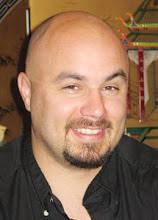
Do you think they resemble each other? I do. I think the resemblance is striking. It's hard to find them in a similar pose at the same age so that the comparison is easy, but these two photos show it. Leif would even more like him if he hadn't started shaving his head when his hair got thin on top. The one of my dad was taken on February 27 1954 when he was 41 years old. You would not believe that in six years he would be dead. The one of Leif was taken on May 31, 2003, when he was 28 years old. He would be dead five years later.

They each chose a method they knew a lot about. My dad was an organic chemistry professor and poisoned himself with a deadly chemical to which he had access. My son was a trained military armorer who had many guns and know how to choose a weapon and a type of bullet which would accomplish his task fully.

But there are startling differences. My father lived 13 years longer than Leif. Was it because he had a real career in a field he loved, a wife and four children, a home? Leif had none of those things. Yet in the end, they did not keep my father happy, healthy and alive. In the end, he chose to exit this life.

I wonder, sometimes, if all these years later anyone but me remembers the day of my father's death. His birth family members and cousins are no longer living. His other children were so young when he died they don't remember him, only the stories we tell about him. There are people who remember who he was, but I think I may be the only one who, in my heart, thinks of him on this day and on his birthday and still wonders why, even though, like in the case of Leif, I can name and tick off reasons. They are not sufficient for me.

I wonder if they would have liked each other. How sad they never had a chance to get to know each other. The surely could have matched their wits against each other.

I miss them both, these two men who were closest to me. I will always miss them and wonder why they could not live.

And I am thankful I did not inherit whatever terrible gene that took the joy from their lives, made them say they felt dead inside, made them want to end it all. How sad that I passed it on to my son.

Thursday, June 11, 2009

The Grandfather He Never Knew - Donald G. Kundiger


Leif never met my father, who died by taking cyanide at the age of 46 when I was only 12 years old, and yet Dad may have passed on several characteristics and propensities to the grandson he never saw. My father was brilliant, as was Leif. He taught himself chemistry, eventually studying organic chemistry at the University of Wisconsin and earning his PhD. He had tremendous musical ability and had studied the piano, playing complex concert pieces. He had the receding hairline that Leif inherited, and that glowing smile. At the time he died, after a couple of years of severe depression, none of us knew back in those days that a propensity for chronic, clinical depression could be inherited, or that the genes for it could be "switched on" by trauma.

Since he died when I was twelve, fifteen years before Leif was born, and I never saw them together, it didn't dawn on me until last fall how much Leif looked like his grandfather. I didn't realize it until I was visiting my nephew, Rick, and saw a photo of him on the wall that reminded me strongly of both Leif (his first cousin) and my dad. Then I suddenly saw the resemblance that Leif bore to his grandfather.

I wish they could have known each other. Leif craved the company of smart people with whom he could discuss ideas. He would have enjoyed my father, though they would likely have disagreed on some things. It's sad that my father never saw his children grow up (my brother and sisters were younger than I was) and never saw any of his grandchildren or great-grandchildren. Sad that he couldn't find joy in life any more, despite his family of four kids and his "American dream" lifestyle owning his own home, a car, and working as an assistant professor of organic chemistry at Kansas State University. By the time he died, he had patented 28 compounds, though the rights to use them were owned by Dow Chemical Company because they had given him grants to do the research.

Dad used to say, way back in the 1950s, that one day we would discover that mental illness is caused by chemical imbalances in the brain. We are finding that out these days. His prediction is coming true, but that didn't save his grandson. Leif didn't ask for help, didn't try medication, as far as we know.

People have often asked me why am interested in genealogy, family history, saying they aren't interested in birth and death dates and a bunch of dead people, but what they don't understand is that family history is the stories, who these people were, the lives they led . . . and how that impacts or influences us. I am more and more sure that they do, in more ways that we can ever know. After all, we are made from their genes. What have they passed on to us?

I have noticed in looking at generations of photos that often there will be startling resemblances between people who are separated by two or three generations, like Leif and my father, but I never dreamed that one of my son's would commit suicide as he did.

Leif grew up knowing about my father's death, knowing how it had affected me. That was one reason that he didn't kill himself at Fort Drum, New York when he was so devastated, because he knew it would hurt me. I told him always to remember that, and that if he ever felt that way again, to remember it and do whatever it took to stay alive. That was not to be. I don't know, and never will know, what tipped the balance and made him decide to put his new pistol to his head and pull the trigger on April 9, 2008. Even though I know of all the problems and disappointments, heartaches, he'd had, what was it that made death seem like the only way out? Was the depression and the decision to die programmed into his genes, passed down from his grandfather, and set in motion by all the trauma he experienced?
------------------------

The top photo is of my father on his wedding day, June 13, 1943 when he was 30 years old, just three years younger than Leif was when he died. The second one, one of the very rare color photos of him, was taken in 1959 when he was 46 years old, less than a year before he died.