Showing posts with label PTSD. Show all posts

Monday, May 29, 2017

Which Leif Garretson Should I Remember on Memorial Day?

When I remember Leif on Memorial Day, which Leif should I remember? The boy who wanted to grow up to be an Air Force pilot but couldn't because his eyes wouldn't pass the flight physical? The college student who joined Air Force ROTC to become an Air Force officer, scoring at the top his class at summer camp, only to be sent home when his body failed him again with a pulled muscle in his groin?

The man who enlisted in the infantry, the toughest physical challenge, to try to find a way into the military, hoping to qualify for Green to Gold to become an officer? The man who went through Infantry Basic Training on a broken foot after a fellow soldier fell on it during first aid training?

The man who breathed and ate sand and dust in Uzbekistan during UN maneuvers and developed severe asthma so that his body betrayed him yet again? The man who served his country with distinction in Bosnia as a peacekeeper? The man who was the best machine gunner in his battalion?

The proud soldier who became a broken man, the one who, with PTSD, finally ended his life like far too many of our veterans? He didn't die in a combat battle, but he died in his own private war, one brought on at least partly by his military service.

So, on this Memorial Day, I remember Leif Garretson, my son, who served his country, and is no longer with us. I will always be proud of him and his service.

This photo was taken around 1999.

Thursday, February 3, 2011

The Difficulties of Diagnosing PTSD and What to Do About It

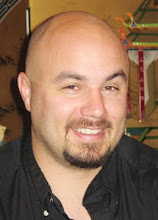
Leif took more photos of himself than he did of anything else. I sometimes wonder about this. He took few pictures of his friends. He photographed his wife and some of the women he dated, but not all of them. He took pictures of his vehicles, but not much else, after he grew up. As a teen he photographed cool cars and our cat, and architecture he liked, but as an adult, his photos were overwhelmingly of him. I always photographed my sons a lot, so it wasn't that no one else was taking pictures of him. So why all the self-portraits? Was he trying to see himself, to define himself in some way?

This photo was one of a series he took when he shaved off his beard a mustache (that look didn't last long) and was dressed up to go to a job fair. He chose this one from the series as an "avatar" to use somewhere online, but wasn't using it to my knowledge at the time of his death.

In this series of photos, you can see the depressed and haunted young man that he was at that time. They are sad photos. They came to mind when I read a long and interesting article about the history of the diagnosis of PTSD and what treatment versus disability benefits might mean. If you're interested, please click HERE for "PTSD's Diagnostic Trap."

A quote from the article seems to describe Leif very well:

They called it "Post-Vietnam Syndrome," a disorder marked by "growing apathy, cynicism, alienation, depression, mistrust, and expectation of betrayal as well as an inability to concentrate, insomnia, nightmares, restlessness, uprootedness, and impatience with almost any job or course of study."


Leif was never diagnosed with PTSD, though he told at least one friend he thought he might have it. It was clear that he suffered from all of these symptoms but one . . . he had no trouble concentrating, but often concentrated on things that didn't help his welfare.

Not diagnosed (I don't think he ever brought it up to his VA doctor), and not treated, Leif also did not receive any disability benefits for it, though he did for his increasingly problematic asthma. He could hold down a job, but became disillusioned and unhappy with every one he had. He once said to me that he wished he could just get a "job that didn't suck."

We hoped Leif would climb out of his depression, but he didn't. The point this article makes about the importance of treatment is paramount. I don't know what would have helped him, but I wish he'd given something a chance. Yes, he had a long series of unhappy events and tragedies in his life, but we always hoped he could overcome them.

If you know someone, military veteran or not, who suffers from these symptoms, urge them to get help.

Monday, December 14, 2009

A Mounting Suicide Rate Prompts an Army Response

A Mounting Suicide Rate Prompts an Army Response
Click on this title to go to the Time magazine article.

This will be a tough problem to treat. Men don't want to reveal their mental problems, for reasons Leif wrote about and I've posted here. They often confide, if they do at all, only in their wives, girlfriends or their best friends, to a lesser extent. They don't want to be seen as weak or "broken." Asking for help is anathema to many.

A contributing factor to some of these suicides, not mentioned in this article, is the breakup of relationships, the end of marriages, or the inability to relate to their wives as they did before. Both husbands and wives are changed by deployment, separation and war. Leif came home from service in Bosnia to find that his marriage was over. He nearly committed suicide then but somehow pulled himself together. He didn't tell us about his planned suicide until years later, although we could tell he was severely depressed, and when he did talk about it, he blamed it on the army, not on his marriage breakup. He never asked for help. He also drank too much after his marriage ended, and I will always believe that had he not been drinking heavily the night he died, he might still be here. Guns, alcohol and depression are a bad combination.

This is sad, tragic way to end service to one's country, a service these soldiers embarked upon with hope and a desire to serve, not realizing or believing what it could do to them.

Please, if you are suffering from PTSD, depression from a failed relationship, or substance abuse, get help, and don't minimize or pass off your depression or symptoms. You life is worth fighting for, even if you don't feel like it right now.

Wednesday, October 28, 2009

Why Doesn't the President Send Condolences to the Families of Troops Who Commit Suicide?

The link contained in the title of this post is well worth reading, an interview with the parents of a soldier who committed suicide during this second tour of duty in Iraq, and who found out that the President (due to longstanding policy, not a new one with Obama) doesn't sent condolences to the families of troops who commit suicide. That seems wrong to me, and very sad for families who are already dealing with the crushing blow of losing someone they love, someone who very likely would still be alive if they hadn't been in the military, and in a war.

Here is another article by the interviewer, "The War Condolences Obama Hasn't Sent," about the same case.

This young man's story is so like Leif's, only Leif was medically boarded out of the army because of his asthma and therefore wasn't sent to Iraq, only to Bosnia, but if he had been sent to Iraq, I don't think he would have survived it.

The suicide rate in the military and among veterans is climbing alarmingly. They are dying of anguish and their lives have been sacrificed on the altar of war and military training. A RAND study found that 20% of the troops that serve in Iraq and Afghanistan suffer from PTSD or depression, and I'd be willing to bet there are more that aren't detected or don't admit it . . . until it's way too late.

Those of us who don't serve in our armed forces and don't have to face multiple deployments to war zones should be very thankful, thankful there is no draft (but it there were, the burden would be shared), thankful someone else is willing to shoulder the burden and soldier on.

But let's value the lives of those who commit suicide, too. They have served.

I think Leif would feel strongly about this, about honoring the service of his fellow soldiers.

Thursday, October 8, 2009

Flaming Out Young


This morning, the conductor of the Women's Chorus I sing with shook her head when we opened up a piece of music and said, ""Mr. Chopin. So many of the great composers died young. They lived hard and burned out, like Mozart. I'm surprised Mozart made it into his thirties. They were brilliant but maybe that worked aganst them."

Someone in the chorus chimed in, "That's still true today," and people started mentioning names like Elvis Presley and Michael Jackson, and others.

I was thinking about Leif. Those people were immensely talented and they achieved great success, so we know about them. But how many more of our brilliant young people who live hard, trying to experience something, trying to figure out how to use their talents, and end up dying young? I've heard too many stories of young men in their early thirties, like Leif, who took their own lives or died of the consequences of their dangerous lifestyles.

Mozart was 35 when he died of a serious fever with rashes and swelling, which at least one medical sleuth says was probably rheumatic fever. Chopin was 39 and died of tuberculosis. Without modern medical care, it may not have been so much their lifestyles as the inability to treat contagious diseases that took their lives. We have to wonder what glorious music they might have continued to give us had they lived a normal lifespan.

We worried about Leif from the time he was about 21 and bought his first motorcycle, driving it like a demon. He admitted to me that he reached speeds over 100 miles an hour. We worried about the way he drove his car, too. I was always glad to know, each and every day, that he was all right. When we all got cell phones about five years ago (Leif had one since 1993, long before most people got them, and paid for it with his salary), I always kept mine with me, including at night on my nightstand, in case something happened to him. More than once, it did. We feared he would kill himself or injure himself terribly in a crash. It was a daily fear.

He had two minor motorcycle accidents and two minor car accidents, a car accident that totaled his Dodge Stratus and hurt his neck, and then the motorcycle that shattered his collarbone and required surgery. Ironically, that one was not because he was speeding. He was on a street in Tampa, near his apartment, going back to work after lunch and a white Cadillac swerved in front of him. To avoid ramming into the back of it, he had to lay the bike down and he hit the pavement instead. How well I remember the phone calls. How glad I was he was not severely injured and disabled or killed.

Leif did not die directly of disease, like Mozart and Chopin, but he suffered from asthma and depression (and possibly bipolar disorder and PTSD). Without those, he might have been able to sustain his life and deal with all the disasters, disappointments and loneliness. With them and a gun, he succumbed.

He was so bright and talented, had so much he could have given the world, if he had ever found out where and how. How sad that none of what he had to offer remains.
-------------------------------
This glowing and joyful photo of Leif was taken the night before his brother's graduation from the U.S. Air Force Academy in Colorado Springs, Colorado on May 29, 1991. It was a great evening. He was ecstatic. He was 16 years old. He lived to be only 33.

Monday, July 6, 2009

Leif's Tenth to Eighteenth Homes - Manhattan, Kansas to Fort Drum NY and back- 1995 to 2001


When Leif left our old stone house in Manhattan, Kansas to live with Nikko, his fiancee then, they first lived in the yellow and purple house on the north side of the 800 block of Bluemont Avenue. They had a basement apartment. It seems this house, like others along Bluemont that once were nice family homes and were turned into student apartments by landlords that didn't care for the property, now seems to be boarded up and probably destined for destruction. Basement apartments in Manhattan weren't cheap. Nothing in Manhattan is, but they were cheapER, the closest thing to affordable. The apartment was unfinished, with the rock walls of the basement partly painted, but not fixed up, paneled, or anything. I don't know exactly when they moved there, or how long they lived there, but for the three years they lived in Manhattan, they lived in three different apartments, so it probably wasn't more than a year. The house was almost exactly through the block and across Bluemont from us, just over a block away, and convenient to KSU so Leif could walk or bike to classes. He was a student with part time jobs at places like the electronics department at Sears, and at Aggieville Pizza, which no longer exists. Nikko worked at a futon store in Aggieville, and later at local restaurants. I think they were married while living in this house.

When they left the Bluemont Street apartment, they moved nearly right across the street from us in the 800 Block of Moro Street, into the basement apartment there. That house was another former family home that had been converted into apartments by a landlord and had erstwhile been a "party house" with groups of students that whooped it up all night on weekends and about drove us nuts. By the time Leif and Nikko moved in there, a calmer group was living in the house. This basement apartment at least had windows that were partially above ground and could be opened. They had rock walls again, but it was fixed up a little nicer. It was still a walkable distance from KSU and Leif was still a student. To get into the apartment, the stairs went down from the back of the house, right from the yard, and they were steep and unprotected from the weather. That meant that if it snowed or we had freezing rain, they were extremely slippery and dangerous. Nikko fell down them once when they were in that condition and got terrible bruises. Luckily, I don't think she broke any bones. The landlord should have been required to cover that stairwell to make is safer.

Although the lived across the street from us, we didn't see them all that often, though they were often at our house for Sunday dinner or special occasions like family birthdays and holidays.

From there, they moved to an apartment complex on Stagg Hill on the southwest side of Manhattan and shared a two bedroom apartment with a friend to help with the rent. This apartment was a lot nicer. I remember it being on the second or third floor. If my memory is correct, this is the last place they lived in Manhattan before they got into such financial difficulties and Leif was working nights full time to try to keep up, and finally quit school and enlisted in the army.

His next "home" was Fort Benning, Georgia, where he went to Army Infantry Basic training and lived in what once were called barracks but the new facilities don't look at all like the old barracks. They are huge brick buildings. After he graduated from training he and Nikko were stationed at Fort Drum, New York and lived in a military housing area constructed in Watertown. it was a complex of apartment buildings and they lived on South Hycliff. We visited them there in the summer of 1999 before Leif went to Bosnia in the fall but apparently either didn't think of taking a photo of their building or I just can't find it.

Nikko lived there while Leif was in Bosnia, where he lived in at least three different camps. I never found any photos he took of them, but he did make a video tour of one of the bases. He was in Bosnia for seven months and returned in the spring of 2000. That was the summer that Nikko left him to go back to Kansas. Leif spent the next nine months there in misery, trying to get his asthma diagnosed and treated, sick, depressed and lonely.

He finally managed to get medically retired from the army in May 2001 and moved back to Manhattan, Kansas, where he again lived in the old stone house with us, the third time in his life, for that summer. He was in a deep depression and we were terribly worried about him and glad he was with us so we could try to help. He was one of those who should have been treated by the VA for depression and possibly PTSD, but knowing Leif, he probably never told anyone how he was feeling. Show no weakness.

He lived with us from May until August 2001, when he moved out and started school again at KSU.
----------------------------------

The photos are:
1. Leif in the fall of 2001, cropped from a family portrait.
2. South Hycliff Drive in the military housing area in Watertown, New York. I think the building Leif lived in is on the lower left on the corner, set back from the street.
3. The house on the 800 block of Bluemont Avenue where Leif and Nikko lived in the basement.
4. The house on the 800 block of Moro Street where Leif and Nikko lived in the basement.
5. One of the apartment buildings on Allison Avenue on Stagg Hill like the one Leif and Nikko lived in.

Wednesday, May 27, 2009

Humbling Experiences

In the past few weeks, I have been humbled by comments sent to me about this blog, people I will never know telling me that they "stumbled upon" this blog and found it meaningful, possibly even life-saving. I am gratified that this has touched their lives, that my son has touched their lives, that his life has resonance for them. I thank them for telling me. That means a lot.

I am also humbled by those who suffer the same loss that we have, who mourn a someone close, especially a beloved child, and for those dealing with depression and bipolar disorder, or PTSD, struggling to survive or help a loved one do so.

My heart goes out to you, to your families. May you find hope, love and peace.

Saturday, January 10, 2009

Missing Leif for Nine Months


Today it is nine months since we found Leif's lifeless body in his apartment and we are no closer to answers about why it happened or how. We miss him terribly and never know what will trigger tears. People say to live in the memories and hope only good ones will be left, but how could the memory of his death be wiped out? It invades the good memories, colors our lives with sadness. There is so much lost, and none of it fades away. No matter how many times I go over all the difficulties and problems he had, all the disappointments, even knowing he had been suicidal in 2001, I still can't really fathom it.

People say there must have been some indication, but men don't show it. They hide it. They put up a good front. My father did. Others who have had a male member of the family say those men did, too, gave no indication of what they were planning. Did things like telling their wives they were going to work and instead went into the basement and hung themselves. Do they become in some way detached? Do they look at it like some kind of ledger sheet, deciding this is the solution to the unbalanced rewards and punishments of life? A rational solution? I can imagine Leif doing that.

And yet, looking back over his life as I write this blog, looking at the photos of a lifetime in chronological order, remembering the things he said, I see a pattern of denial of much of the hurt and pain he felt, because the evidence is there in other ways. I see a vulnerability he denied and hid. I see a deep need for love and companionship that was always thwarted and left him in despair. I see a strange combination of cynicism and almost unreasoning optimism that next time things would turn out right . . . until the end.

I see a moodiness, even as a child, that didn't seem pathological, but may have been deeper even then than he showed. I see highs and lows that deepened as an adult and now I wonder whether he either suffered from bipolar syndrome or PTSD. He certainly had experiences that could have caused PTSD, and I found an information pamphlet about it in his apartment after he died. And, months after his death, had a surprise correspondence with someone he never actually met but spoke with and corresponded with who said he speculated to her that he had PTSD. Did he take a dive into the deep low of bipolar disorder in the early hours of April 9th?

In researching bipolar disorder to find out more, I discovered that it seems to have a genetic component, like chronic depression, and is a physical disease caused by chemical imbalances in the brain that distort thinking and that those suffering from it are at high risk for suicide. The onset of the disease seems to be caused by trauma and once set in motion is very difficult to treat. Did Leif get that genetic component through my father, for either chronic depression or bipolar disorder? It seems heartbreakingly likely.

Leif, the student of psychology, the observer of life, who tried so hard to help others who were suffering from bipolar disorder, depression and sadness, and made sure they got professional help and medication, never (as far as we know) revealed his own depression to a professional or took medication for it. Instead, he tried to "treat" or self-medicate his depression with alcohol and shopping. His "show no weakness" code probably prevented him from seeking help. I wish he had.

I asked him many times about depression, sent him online self-evaluations for it, but until November 2007 he denied it completely. He new enough about psychology and testing that he could easily fool those tests, and would report to me that he was fine. I think he wanted to believe that.

Whenever a loved one dies, we try to think whether there was anything we could have done to prevent it, to help, but it's far worse with a suicide. Even if you know it's not your fault, you ache to think of their pain and agonize over whether you missed the signs or didn't do what you should have to help.

Leif is gone and the days pass. Most things are normal, but he's never far from our thoughts and the sadness is always just under the surface, waiting to express itself.

This photo was taken the fall of 1992 during his senior year in high school by Blaker's Studio Royal in Manhattan, Kansas. He was 17 years old.