


The morning of April 10, 2008, I woke with a sense of dread. We still had not heard anything from Leif. Michael called about 7:30 a.m. to say that no one from Tally Ho Pub had gone to check on Leif and had he tried again to call him without success. Peter W. and I got dressed and ate breakfast with a sense of foreboding.
I chose to wear my "Worrier's Manifesto" t-shirt that I had designed for CafePress, the one I've written about here before that was created half as a joke, half as reality because I did worry about Leif. I thought if we found him alive and reasonably well, I would "give him a hard time" about making me worry like that and if we didn't find him okay, my worries would be confirmed. I also took a second set of clothes in a tote bag, thinking that I might encounter some kind of mess that I would have to conten with. Little did I know what I would find.
We drove to Leif's apartment complex in Tampa with fear in our hearts. I was so hoping that when we got to his building, we would find one of this vehicles gone and that would mean he had gone off somewhere for whatever reason, maybe with this phones turned off, but that was not to be. As we pulled into the parking lot, we could see both his car and his motorcycle parked there and that's when I got really scared.
Leif lived on the second floor. All the buildings in the complex were two-story. We went up the stairwell and knocked on the door, then banged on it and shouted for him to open. There was no response and the door was bolt-locked from the inside, so we drove over to the manager's office and explained the situation to her. She handled it well and was willing to let us into the apartment. She came over with a man from their maintenance department and stayed respectfully down on the walkway outdoors. It was a beautiful sunny morning.
The apartment was cool, the AC turned fairly low. The way the apartment was laid out, we came in to an area that branched off to the bedroom, bathroom and dining area. Beyond the dining area was the living room and to the right of the dining area was the door and pass-through to the kitchen. I looked in the bedroom and he wasn't there, nor was he in the bathroom. I went into the dining area, which he used for his computer desks, and saw that he wasn't there, either. His desk was neat, cleaned off, and his pistols were laid on one side of it along with a couple of letters. On the left were his wallet and keys, and, oddly, his income tax return, as though he wanted us to know he had filed it. His iPhone was in it's cradle. Seeing that his wallet and keys were there put a stab through my heart.
I could see from there that he was not in the living room, though his laptop was open on a wooden tv table, asleep.
Then I looked into the kitchen and my heart stopped. All I could cry was, "No, Leif, No! Oh, no, no, no, Leif" over and over again.
He was on the floor in a pool of blood, his head and shoulders propped up by the corner made by the wall and the refrigerator, his feet toward me as I stood in the doorway. I thought he had shot himself in the eye because his eye looked damaged. Thank goodness his eyes were shut.
A gun was on the corner of the countertop with the barrel pointing toward the doorway and the handle toward him. He was cold and still and there were no signs of a struggle, or even as though he had moved once he hit the floor. Along with some unspent bullets, the countertop also had a bag of baby carrots and some ranch dressing dip. It looked as though he had been standing at the countertop eating carrots and playing with the gun.
Peter W, could not take the sight. I had to keep him away. I wanted to get down on the floor with Leif and hold him. i wanted so badly to hold him, but I knew I couldn't, because I had to leave everything untouched and call the police.
I used his house phone to call 911. I reported his death by gunshot and said i thought it was a suicide. The 911 dispatcher said not to come to that conclusion yet, that there had to be an investigation, that we shouldn't touch anything and wait for the unit to arrive.
I went to tell the apartment manager that we had found him and called the police and then came back into the apartment.
I kept Peter out of the kitchen and we just stood there in the computer area and waited. When the sheriff's deputy arrived, she was kind but said we had to leave the premises until the investigation was finished. I guess I should have known that we couldn't stay while they did their work but it hadn't occurred to me that I would have to leave Leif there and wait. We went outside to our car. Soon the homicide team arrived. The detective told us we could go somewhere else to wait, but where else would we go? We stayed in our car. We were questioned at length about Leif and what we knew, but all we could tell them was that we couldn't contact him the day before and we had come to find him and the apartment manager had let us in.
They interviewed others in the complex but no one had heard or seen anything. One of the deputies called Michael in Atlanta and asked him what he knew. it seemed like we waited forever but it was probably about two hours. Then the body detail arrived. Two young guys went up the stairs with a gurney. I couldn't even imagine how hard it would be to get a dead weight of nearly 300 pounds lifted into a body bag and onto a gurney and take it down the stairs. When they showed up I knew I would not have the time I wanted with my son's body, that it was going to be taken away to the morgue for an autopsy and I wouldn't get to really say goodbye.
When they brought him out in the blue zippered body bag, I asked them to open it so I could hug him. They all refused. They thought it would be too traumatic. They didn't want me to see him, but he was my son. I wanted to see him. I wanted to touch him. I tried to convince them, and I know they all thought they were doing what was best but it wasn't best for me. I came to understand that I had to spare them the sight of him and of me hugging him goodbye, so I settled for just putting my hand on his head, on top of the body bag, and silently said goodbye to my son, tears running down my cheeks. I have regretted every day since then that I didn't get to hold him. Peter says it was just a shell, that Leif was no longer there. I know that, but it doesn't change my feelings. He was my son. A mother should be able to hold her son and say goodbye, and I didn't get to do that.
Someone said I could have gone to the medical examiner's office and seen his body, but that was not the same. I didn't want to go there, in that place, after they did an autopsy, and look at him then. I know what an autopsy entails, and I didn't want to say goodbye to my son's body in a morgue.
So, they took him away, and the detective told me she thought it had all the signs of an accident. She did not think it was a suicide. The questions began and they have never ended. She said she had investigated many gunshot deaths and that even people who were expert gun handlers had terrible accidents. I told her that Leif was a certified military armorer and knew gun safety. I could not imagine him accidentally shooting himself in the head . . . except that I could. I could see him playing some stupid drunken game, toying with the idea, putting the gun to his head, and maybe pulling the trigger just a little too hard. It was a new gun, unfamiliar to him, after all. He might not have known just how much pressure it took to fire it.
The sheriff's personnel who were there told us that they would either have to impound all of Leif's guns or we would have to remove them from the apartment, so we asked them to make sure they were not loaded and we would remove them. They also told us to make sure we got the motorcycle out of there and any valuables taken out of the apartment because a lot of people had seen him being taken out and would know the apartment was empty. It would be a theft target.
They told us they had not found a suicide note.
Once they were gone, I started scouring his apartment looking for some message from him. I looked at the call logs on his cell phones, the text messages. I checked his email. I looked for handwritten notes. I checked recent files on his computer. The only thing I found was what was on the "desktop" of his laptop computer, left open on that television tray table by his chair in the living room. There were two files open side by side. One was the sepia toned self portrait he had made with PhotoBooth on February 28, 2008. He looked inexpressibly sad. Beside it was the file of his final philosophy paper that he had written for the class he took in the fall of 2007. He had recently emailed the paper to me and we had discussed it. He had written it back in December 2007, so it was four months old. It was not like Leif to even be remotely interested in an old school assignment, so the fact that he positioned the paper right next to the picture seemed to me to be Leif's way of saying, "Look at me. This is how I feel. Read this. This is my explanation."
The paper was showing a specific passage on the screen. I assumed that meant he wanted me to read it, that it was the message he wanted us to get. However, no one but Peter W. and me can see what he meant. I will post the paper at the end of this entry so you can read it for yourselves. I will italicize the part he had on the screen.
We had no way of getting the motorcycle or his car to our house because I never learned to drive a manual transmission and Peter hadn't driven one for 28 years. He was in no emotional shape to try. I got on the phone in the apartment and started notifying Leif's insurance and finding out how we could get the cycle towed to our house. We had no idea how we were going to get the other things that needed to be removed immediately out of there so we called our neighbors, Bill and LaRae, and asked if they could bring their pickup truck and help us. To this day, I don't know what they had planned to do that afternoon, but they dropped it and came to help us. I know it wasn't easy for them to come there under the circumstances.
The sheriff personnel had tacked a sheet up over the kitchen doorway so that you couldn't see in there unless you pulled it aside. That was a good thing because we didn't have to look at the blood while we worked to pack things up. We only took the guns, electronics (like his computer and television), phones, and his mountain bike that was standing in the stairwell. We couldn't take any furnishings or clothing.
The towing company came and loaded up the cycle, and Bill drove Leif's car to our house for us.
On our way home, I used my cell phone to call my mother and tell her about Leif's death.
We were alternating among crying in wracking sobs, talking and trying to fathom how this could have happened, and trying to figure out what to do next.
At home we unloaded our car and Bill's truck, and put Leif's two vehicles into our garage. That evening, I had to start calling family members to tell them the tragic news. The hardest one to tell was Peter Anthony. We didn't know he was in Texas visiting his daughters, and calling his cell phone to tell him put a terrible pall over his visit with them.
There was so much ahead of us; planning Leif's memorial services and finding a place to have them, figuring out how to arrange for inurnment in a national cemetery, getting the rest of his belongings out of the apartment and selling his furniture, cleaning the apartment, notifying friends and family, and so much more. We were in shock and terrible grief.
It was three days before Peter W's 65th birthday and he had lost his son.
It was the most terrible day of my life.
Later, at home, I went through every file of his computers, every message and call on his phones, all the papers we found in the apartment, but we never found another clue about why he did it. We were left with our speculations, the philosophy paper, and two letters turning him down for personal loans, which he had received not long before he shot himself.
Tonight I lighted the two special candles made for Leif's memory, the one from Darlene and Marcus that has pictures of Leif and things he loved around it, and the beautiful one with the poem on it that Peter W's cousin Wolfgang and his family sent from Germany. I think to myself that the soul must be a little like the flame of a candle. You know it is there. You can see it and feel its warmth, but it has not substance. You can pass your finger quickly through it and not even feel it. You see its light, and the light pushes away the darkness, but it has no solid form. Leif's soul was a bright light, but it has gone out, at least in its earthly form, and I will never feel its warmth again.
-----------------------------
Leif Garretson
12-11-2007
Final Examination
In addressing the questions presented for this final examination it seems to me necessary to touch at least briefly on each, as with such general examinations of philosophy no single inquiry exists isolated from others.I shall focus on the the first and last questions relating to metaphysics and morality and the relationship between goodness and happiness. However, in order to address these questions, particularly metaphysics, we must examine what we can truly know. When considering morality as it relates to metaphysics there is one underlying question which is of paramount importance. That question is the existence and nature of God. The reason that this is of paramount importance is that the existence or absence of God, as well as the nature of God, can have great bearing on what one considers to be moral.
For the faithful, for whom God's existence is generally self evident, morality is often defined within the confines of sacred doctrine or scripture. A Christian, for example, who accepts the existence of God and believes that his nature or will can be known via the scriptures will have a moral code that might very well differ from an atheist, and agnostic, or even a non Christian believer. There are many acts which are considered sinful according to doctrine but which might be considered perfectly moral in their absence. Contrarily there may be action which would seem immoral in the abstract, such as killing a non believer, which can be justified under some religions.
If we are to consider Descartes and the skepticism of all that we perceive there is little that can be known. While Descartes himself seeks to rationalize the existence of God, as do Anselm and Aquinas, all such attempts to know such things are merely illusory and even if successful might suggest the existence of a God yet fail to provide evidence of his specific nature. To further explain this statement, while it might be possible to convince one's self, rationally, of the existence of God, such existence still does not further prove a specific divine will. Thus even if the aforementioned examinations of God's existence were not so lacking in their strength one could only conclude that God exists and not that his will is congruous with any particular sacred doctrine. The result of this realization is that one still cannot, even if he acknowledges the existence of God, accept the teaching of religion unless the moral codes contained therein are consistent with one's own rational determination of what is just and good. Thus ultimately the existence of God is irrelevant to morality as we cannot place any credence in the varied and often contradictory teaching of the myriad religions. God's existence can only be thought to matter if we assume without cause that he is concerned with our actions or intentions. If we do make this leap of faith and conclude that God is concerned with our action and intentions then we must decide how best to act and intend. Given that the notions of religion as stated above are often disparate and contradictory as to what God favors as good, we must logically discount them as flawed and unreliable and therefore must seek our own council on what is good or just.
There is the primary significance of Metaphysics as it relates to morality. First if God exists, which can hardly be convincingly demonstrated, and second what is God's will or expectation of us? The latter of which has yet to be demonstrated in any rational fashion which is not refuted by an alternate religious hypothesis. Given that neither Christianity, nor Judaism, nor Islam, nor Buddhism, nor Hinduism, nor any other doctrine of faith can be demonstrated with credibility to be more right or correct than another we must conclude either, that such an absence of clear guidance means that God is unconcerned with out actions or intentions, or that he has placed within us a moral compass which is innate and which surpasses and supersedes the religious doctrines of men. Thus our own conscience and the degree to which we follow it is the true measure of human virtue. Those who subscribe to religious doctrine would have us alter our action contrary to our own reason or conscience based on fear or punishment or damnation. I would argue that this is flawed, for if such things were evil in the eyes of God their corruption would be self evident as well and thus such threats of damnation would not be necessary. In fact, true virtue is doing what you believe is right regardless of the repercussions in this life or the next. As Socrates said in Plato's Apology: “You are wrong sir, if you think that a man who is any good at all should take into account the risk of life or death; he should look only to his actions, whether what he is doing is right or wrong, whether he is acting like a good or bad man.” (Cahn p.34)
Now before moving to the Fourth question I wish to focus on, it is relevant to make a note as to the third. Namely, if after millennia of enquiry Philosophy has failed to produce any definitive answers to the big questions, what is the point of further philosophizing? The simple answer is that that action of doing so develops the conscience. It causes us to examine our own actions and intentions and decide for ourselves what is truly just and right.
Given the above, the final question of: what, if anything, is the connection between being happy and being good? is relevant. Does goodness result in happiness? Such a question is difficult to answer as one cannot know the mind of another. Is a wicked man happy? A good and just man might speculate that because it would damage his soul to do evil thus the evil man must also suffer such damage. But one cannot know this. Similarly, as we cannot know if God exists, nor if he cares as to our natures, whether there is any penalty for those who are purely predatory and self serving. Ultimately, much if not most of Philosophy, is based on assumption. Epistemology fails to tell us what we truly know: without such knowledge Metaphysics is pure speculation; without a metaphysical framework Ethics is based purely in convention and the assumption that others are like us. While this is surely assumption it is utilitarian in purpose and must be assumed if are we to gain anything from our conjecture. Therefore, assuming that others are like beings, that they are thinking creatures capable of empathy and compassion, it is reasonable to assume they are also possessed of conscience.
In the context of conscience intentions are far more important than actions. As Immanuel Kant stated: “There is no possibility of thinking of anything at all in the world, even out of it, which can be regarded as good with without qualification, except, a good will.” and further “A good will is good not because of what it effects or accomplishes, nor because of its fitness to attain some proposed end; it is good only through its willing, i.e.,it is good in itself.” (Cahn p.984)
Ultimately, if we are to examine the relationship of happiness to goodness we must admit that these judgements are subjective as what one considers good is not universal. Actions which we might consider to be evil might be considered to serve a greater good when viewed from another perspective. Thus the subjective question of whether the will of the actor was good is paramount to its objective result. If that other acted in good conscience then regardless of the objective appearance of an act we must acknowledge that the actor may be of clear conscience and therefore free of the torments of guilt. Relating to good will and action I refer to Socrates' assertion in Plato's Crito “Do we say that one must never in any way do wrong willingly, or must one do wrong in one way and not in another? Is to do wrong never good or admirable?” To which Crito agrees it is never acceptable. Socrates in particular is a portrait of such conscience and virtue as he is happier to accept execution than to suffer the torments of guilt were he to act against his conscience in interest of self preservation.
What we must conclude of this is that barring some defect of consciousness which might leave the conscience impaired, such as the afflictions our legal system might accept as incompetence to judge right from wrong, that a person possessed of a conscience will be tormented if they have acted in such a manner that is unconscionable. That it should be impossible to be truly happy if you have achieved pleasures in the absence of good will. While said pleasures are undeniably a source of great enjoyment the weight upon the soul at the guilt in attaining them may preclude true happiness.
Again this is assumption. We cannot know the conscience of others nor be sure that they could be tormented by guilt such as we. Nor can we know if they have a conscience or are afflicted with some defect that destroys it. Similarly we cannot know if that defect has a bearing on their souls. Further, returning to metaphysics, we cannot know if that weight of guilt, nor conformity to conscience will sway our interests in the eyes of God or if God even exists or cares. Ultimately, all that we can do is be true to our own conscience and seek our own happiness in our own goodness and if we believe that there is a God and that he cares how we act, that we have acted in a way that is consistent with the only moral compass on which we can rely.
-----------------------------
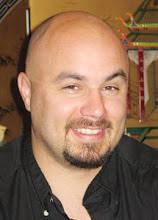
The top photo of Leif was taken on April 10, 2004, exactly four years before he died. I think my mother took it at an Easter dinner at her house in Manhattan, Kansas, the year before Leif and Peter W. moved to Florida in March 2005. How sadly he changed in those four years.
The photo of Leif's kitchen was taken after I cleaned it. I was surprised at Leif's apartment. Leif was no housekeeper, no homemaker. Periodically he would decide to clean the place up, but generally it was a mess, except for his computer desk, which he usually kept reasonably neat. That area was his pride and joy. When we got to his apartment on April 10, 2008, I was surprised that it was, for him, relatively neat and clean (not neat and clean by my standards). There were not dirty plates, cups and glasses standing around, no beer bottles except for one on the kitchen floor, from which he may have been drinking. He had loaded and run the dishwasher and taken out the trash. I suppose he did most of this during his day off. That, again, doesn't seem like a man planning on suicide. Why would he care of the dishes were washed and the trash removed? I think he died when he made a sudden decision, or perhaps there was a horrible accident.
The sepia toned photos was taken by Leif with his iMac's PhotoBooth program. He took a lot of shots at the same time and used a variety of effects on them. the photo was taken on February 28, 2008, not long after he had been notified that he would not get his GI Bill benefits and dropped out of school.



 Posts
Posts

