Showing posts with label sorrow. Show all posts

Tuesday, April 9, 2013

Five Years

Five years. I still miss him. I still ask why. It still hurts that he is gone.

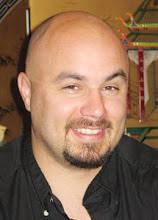
This is a photo Leif took of himself with his computer camera in November 2007.

Wednesday, July 21, 2010

The Persistence of Grief and Mourning; Remembering How to be Happy

I was reading an article about how new experiences create new pathways in the brain. It was focused on positive new experiences, ones that would enhance one's life and help to keep the brain functioning. It talked about learning new things, trying new things.

What it didn't say was what happens to us when new experiences are thrust upon us that are negative, traumatic, or terrible. How do those experiences create new pathways in the brain? They do.

It occurred to me that the intensity of grief and mourning for someone as close and loved as a son, or for others a daughter, spouse, sister or brother, parent, someone deeply loved and part of one's life, must create new pathways of sadness and longing that are indelibly etched upon the brain.

When we are mourning our losses, we go over and over those pathways, over and over the ground, asking questions, trying to over and over to remember every detail and nuance, trying to understand and fathom how death could have taken away someone so loved. Each time we go over those details, think of our loved one, feel our grief, those pathways are strengthened. It can become an obsession.

Each time we think about the death; each time we think about our sorrow, it is reinforced, strengthened to rise again and again.

It's hard to get past grief because the neural connections we formed as the bonds with our loved one are still there, still yearning for that contact, and now, added to them, is a whole new set of sad ones related to their death and all that surrounds death; the funeral, disposing of their belongings, contacting friends and relatives, taking care of their affairs.

How can we get past it, when we are in essence practicing our grief a dozen times a day?

Some people never do get over it. They mourn and are sad the rest of their lives. Some get past it, manage to function, but are brought back to their grief when a reminder catches them. And some are able to move on after a time.

I've given a lot of thought to how they do it. I think first and foremost they have to want to get past their grief and sadness. They must have other good things in their lives and they must have hope. But I think the most important aspect of recovery is a conscious decision to work at it.

How does one do that? When we are depressed or sad, we don't feel like doing any of the things that would help. We don't want to be with people. We don't want to socialize. We don't want to have fun, because nothing sounds like fun. We don't want to exercise. In fact we don't want to do much of anything and we don't care about much, either. No matter what someone outside our grief might say we have that is positive and good (and regardless of whether we know we have much to be grateful for), we see and feel the hurt, the loss, the pain.

We have to also be able to forgive ourselves for wanting to return to a normal life, because there is a guilt about being happy when someone you love is dead.

Although I have come to see that much, what I don't know is how a person gets to that point, a point where he or she is able to do the things that will help them heal, to want to live again, to try to turn away from those strong and demanding mental pathways to something new and happier.

How does one "give up grief" when it has become the "habit" of the brain?

Does time heal? Yes, the acuteness of grief subsides, but what is left in its place? Sometimes lethargy, depression, and sadness. Sometimes they fade and the grieving person emerges into a new life at some point.

I think that partly what happens is determined by that conscious decision, which can only come when the deepest grief has passed, but another part is beyond our control. There are things in the brain we cannot begin to control. If we are saddled with a genetic disposition to depression, the death may well be the "switch" that turns on a lifelong battle with depression. Even when it is not a deep depression, it can sap the joy out of life and dampen down its pleasures.

I think Leif fell into depression when he lost his loves, not through death, but never-the-less through the death of relationships he so badly needed and wanted. To be cut off from love is excruciatingly painful.

For those of us recovering, we also have to somehow remember how to be happy. That sounds foolish to someone who hasn't been in this situation. Why would anyone have to remember how to be happy? But it's true.

I started thinking about that a few days ago while swimming outdoors at sunset. They sky was beautiful, the water warm, the evening balmy. Although I was glad to be swimming, I realized that I wasn't feeling the happiness and joy I used to feel in that very place and situation before Leif died, back in those days when I would look forward to a text message "conversation" with him later in the evening. I decided I needed to try to remember how I felt when I was happy, to remember what happiness was.

At first, I could remember WHEN I had been happy, and I could recount to myself things that had made me happy, but I didn't feel it. It still had the subdued, flat feeling of a mildly depressed person.

But I kept trying. On bicycle rides, instead of just looking down at the street and pedaling along, I made myself remember how I used to enjoy looking at the houses and yards to see what kind of landscaping they had, at the ponds, at the clouds, so often beautiful in Florida, and the birds. I remembered how I loved to listen to the mockingbirds sing. I didn't feel as I once did, but I began remembering that I HAD felt it and recalling what it was like.

In the pool, I remembered how I loved to float on my back and look at the clouds, swim toward the palm trees and marvel at how it was like being on vacation for a short time each day.

At home I remembered how good it felt to accomplish a task, not just what I had to get done each day, but something more, and something creative. So I created two photo books and began to work on getting some other things done that have been waiting for a long time.

This wasn't easy, especially the "getting things done" part. And it's not without backsliding. I don't yet feel as happy and energetic and motivated as I did before Leif died, and I don't know if I ever will. Even if I do, I know there will be days and moments of sadness and longing.

But I do know that I can find happy times again and that I have given myself permission to be happy. I do know that it is partly a choice, but partly a fight with my own brain and feelings.

Leif left a huge hole in my life. That isn't going to change, but I was thinking about another situation with someone I know and how she ought to make the best of her situation, and as so often happens to me, I turned the reasoning on myself. I asked myself, "Am I making the best of my situation?" I had to answer, "No."

So I am trying. It isn't easy and it won't be quick, but as I look back on the past 27 months, I recognize happy moments, however small or fleeting, along the way. I remember the first really happy trip Peter and I took in April 2009, to St. Augustine, and the best one since Leif died, to Germany in May 2010.

The tides of emotion will continue to ebb and flow. The rollercoaster ride isn't over. I know I am not yet a happy person, but I do have happy moments and I am working to have more of them.
---------------------
The photo of Leif was taken in our living room in Honolulu, Hawaii in about 1984 when Leif was nine years old.

Thursday, July 15, 2010

Coming Home -- and not coming home

Travel and work are the best antidotes to grief and depression, even if they don't always work. Initially after Leif died, even traveling didn't take me far from sorrow and tears, but as the two years passed, I found that being gone from home allowed me to focus on my trip and destination, the people I was seeing, the sights, even though we always talked about Leif. It was as though I didn't expect to see him in those places, so his absence was not painful.

Coming home, though, has continued to be sad. Although I love my home and look forward to returning to it, once I get here I am struck again with Leif's absence, with his things in my house, and the knowledge he will not be coming here ever again. I remember that the guest room was once his room, that my office was once his living room, before I moved down here from Kansas. So many memories. So many years of expectations, of seeing him, loving him.

Peter is so good to me, tries to hard to cheer me up, reminds me of all the good things in my life. He's so loving and sweet, and he's so right. I have so much to be happy about, so many reasons to enjoy life.

But none of them bring Leif back or take into account how much I miss him.

-------------------------------------
This photo of Leif was taken in Norway in the summer of 1977 when he was two-and-a-half years old.

Monday, June 21, 2010

Father's Day

Another women who lost a son to suicide was talking to me a few days before Father's Day and she said, "Why is it that these days like Mother's Day or Easter are so much harder? They're just another day."

The trouble is, they aren't just another day. They are days with significance, a significance we have been taught all our lives. They matter because humans measure time, and they designate certain days as having some kind of importance.

She said they only get "two months off," meaning that every other month has either a holiday or a family date like a birthday in it, so they are always anticipating those occasions when their son won't be with them.

I know how that feels now. We are into our third set of birthdays, Mother's Day and Father's Day without Leif, and soon it will be the Fourth of July (one holiday he really liked), then in the fall, Thanksgiving and Christmas. Each one of them is another day we will realize he won't be coming, something we had an expectation of over the years, because except for such rare instances, he always WAS there. He was an integral part of our joy and celebration of those holidays, and now having to experience them without him seems saddened and partly empty. We have other family members but they haven't been with us for these times over the years, so their absence is not so keenly felt. The expectation isn't there.

I find that my subconscious starts anticipating the holiday without Leif and I become sad. It happens to Peter W., too. We both feel that Mother's Day and Father's Day are diminished, that we have only half our children (for we had only two sons) still there. Does that mean we are half the parents we once were? It's hard to be happy on those days.

It's impossible not to think about Leif's death on those days set aside specifically for mothers and fathers, for that's what we were to him, and those were days he shared with us.

I found myself fighting tears.

I made a card for Peter W. and had a hard time deciding what photo to put on it. It doesn't seem right to put a photo of our family without Leif, though he is no longer here, and that's what I did on the card last year. I chose a photo of our boys in Germany when they were small, beautiful little boys! Those days are gone now, are just fond memories now made all the sweeter because we know they not only will never come again but Leif will never be with us. I had tears in my eyes when I made the card, but I didn't expect Peter to have them in his eyes when he looked at it. He was affected, too, saddened again at the loss, asking why Leif shot himself, how he could do it.

And we will never know.

The thoughts and the feelings go beyond that. I rarely turn on the car radio but I did a day or so ago and there was some sweet and slightly melancholy love song playing, and the words just made me sad, both because, as I've written before, love songs can be interpreted as other than romantic love, and because I was sad that Leif never had the romantic love he so desperately sought and hoped for.

Coming home from a wedding on Friday, we crossed the Sunshine Skyway Bridge, and I think we will never cross it without thinking and talking of Leif. And at the wedding, which was beautiful, I thought why couldn't Leif have found a love like this?

The memories are everywhere. The feelings are still so strong and deep. The sadness comes back in waves. It has burrowed into my heart.
-------------

This photo of Leif, Peter W. and Peter A. was taken in April 1987 in the area of Fort Sheridan, Illinois. Leif was 12 years old, and acting goofy because he didn't really want to be posing for a photo. There were others taken at the same time that were better than this one, but these are my three guys, the ones that mean the world to me.

Sunday, June 20, 2010

Words of Sympathy?

Yesterday I was trying to choose a sympathy card for the family of a cousin who died and I found that the cards were so inadequate and full of platitudes that really don't help. Before Leif died, I used to write my own messages about how people could take comfort in their memories. Now, I know that such comfort doesn't come. While one may be grateful for many of the memories, thinking of them doesn't bring peace or comfort, it brings the sense of loss, of knowing those times are gone and there won't be any more.

The idea that someone lives on because of our memories seems empty and foolish to me now. The memories live on in our hearts and minds, but the person lives no more. It may be a nice thought that they "live" in some sense because they are remembered, but it isn't so. The memories "live."

The one thing that the cards say that might actually be true is that the love and care of family and friends helps. It helps one get through the grief, but it doesn't take it away. It helps one realize there are others to care about, reasons to go on, people to love, but it doesn't take away the pain or the sorrow.

So what could one, or should one say to a grieving family. I am brought back to what Jason Palenske said at Leif's memorial service, something he learned by asking his grandmother, "I'm sorry for your pain." That, and recounting one's own memories of the deceased, are, to me, what is of value, and real, not some pretty but meaningless platitudes.

A few days ago, while I was in bed, a very short poem came to me, and I think it says what I feel.

Sorrow

Sorrow digs deep
into the heart
and burrows down
to make its nest.


Maybe someday I will add to it. Maybe there's more after the nest is made.

-----------------

Peter W. found this photo of Leif out in the garage. It is an unused Army dependent ID card photo and was probably taken when Leif was about nine or ten when we were living in Hawaii, but it could be as young as seven or eight. In any case, that would put it between 1982-1985. He looks so sweet.

Friday, April 9, 2010

Remembering


My sister Lannay and her husband Doug sent this beautiful bouquet today in remembrance of Leif. They were his aunt and uncle. We were very touched and thankful. It's a hard day for us. I couldn't sleep last night. We miss him so much! I'm glad others remember him, too, with love. Thanks to those who are posting on his Facebook page today.

How can it be two years already? At almost exactly this time on this date two years ago I was calling his three phone numbers and sending him text messages and email, all afternoon and evening, trying to find him after his work supervisor called me, worried because he had not shown up for work because he was so reliable. We did not know he was dead until the next day.

Wednesday, March 10, 2010

Small Accomplishments and Thinking of Leif 23 Months After His Death

I was watching Fabio Zini perform on the guitar, a song he composed for a trio of guitar, sax and piano called "Feel Good," and although the mood of it may have been intended to be happy, it made me sad. It seemed more melancholy than happy to me perhaps because of the soft, rather mournful sax and the gentleness of the guitar and piano.

I wondered why I would feel sad for a moment and then it came to me. I thought about Leif's belief that no one but his parents would care if he died (though there were so many more people who cared about him than he knew) and it made me sad that he felt his life was of so lttle value to the world. His life was of inestimable value to me.

I thought that there are not so many who would care about my death, either. So few people in the world really matter to many others; so few of us have any real impact upon the world. I never expected that I would. As I've written before, I never had big dreams, never wanted or expected fame, never sought popularity or felt I could have it, but I would like to feel that I succeeded in the small goals I had.

But what have I achieved that I did seek, those things that mattered to me? Have I even managed those dreams and goals I set for myself? The ones that ultimately mattered, at least to me?

When I was in high school, I wanted to earn a college scholarship so I could afford to go away to school and I did that. I wanted to graduate Phi Beta Kappa, and I did that. At that age, such things are important, but in the great scheme of things they don't matter much, especially since I never pursued a real carer with my education. And during that time my dreams changed.

I had wanted to be 28 and have a PhD before I got married, but life has a way of changing goals. I met Peter when I was only 17 and a freshman in college, fell in love and married when I was only 18. Although I finished college and went to graduate school, what became most important to me was my marriage and having a family. It came as a surprise to me how badly I wanted children, as I had been focused on education and career.

I did have interesting and rewarding jobs that also fulfilled modest goals, whether working as a librarian or writing books, and I am thankful for those opportunities and the memories I have of those times, but they are not the measure of a life, nor was I well known in either field.

I have been lucky to enjoy an interesting life, living and traveling around the world, certainly rewarding to our whole family and for that we have to thank Peter and his career for making it possible.

I have been blessed with my birth family and a close relationship with my mother, especially, and my sisters, brother, and their families. I treasure my friends, though they are not numerous.

But the greatest meaning and value of my life is my family. I was (and am) so fortunate to have Peter, to have found such a loving and devoted soulmate and friend. I loved being a mother, loved my two sons, and tried my best to raise them well.

That is the real test of my life. Did I succeed? What is the criteria? Their childhood lives? Their adulthood? (How much influence did I have over that?) Is it their material success, their happiness?

If the measure of my success is my family, and if one thinks that the adult lives of one's children are in some way influenced by their childhoods, then I have failed sadly in some ways. Although I think my sons childhoods were good, either I failed I'm some terrible way or I wasn't able to influence their adulthoods in the way I wish I had. What greater failure can mother have than to have her son find life so painful that he takes his own life? I could not keep Leif alive no matter how hard I tried. Was it that I didn't know what I needed to do, or that it couldn't be done? Was it that I didn't provide him with what would have armed him against detachment and depression when he was a child, or that there was nothing I could have done?

I know thar Leif's death is not my "fault," not something I caused, but even so, it will always feel like a great and terrible failure.

I know I cannot measure the value of my life by Leif's death, but what IS the real value? It is still my family, and perhaps my accomplishments, small though they are in the vastness of the world and it's history, are at least meaningful to them. I know Leif knew I loved him, even if my love could not keep him alive. I know Peter Anthony, whose academic and work life have encompassed many milestones, knows I love him and admire his accomplishments, and would and will love him always, no matter what.

I have three beautiful grandchildren I enjoy who like being with me. And most of all I have my soulmate of 45 years whose love makes every day worthwhile.

So, as I thought all this, during the song, "Feel Good," I came around to that feeling after all. My life is meaningless in the great scheme of life, but it is meaningful to me. Ever since Leif died I have been telling myself to keep perspective, not to lose track of all I have in my grief over Leif's loss. I knew I should focus on all the good in my life but I was unable to really do it. My grief was still too strong and fresh until now to feel the appreciation I should.

Maybe it takes two years. Is two years of mourning enough? On March 9th Leif has been dead for 23 months. Thinking of it still makes me inexpressably sad. I still miss him every day. We talk about him every day. I don't think that will ever end, just like the eternal questions about why his life ended so abruptly and violently.

But I think now, for the first time since his death I can truly and deeply feel the overwhelming sense of gratitude for my Peter and my son Peter Anthony, for all of my family, to be thankful that unlike Leif at the end of his life, I have people who need me and a sense of purpose.

And I will be thankful for Leif's life and the purpose it gave me, even though his loss brings so much sadness and sorrow.
-----------------------
This photo of my two beautiful sons was taken in Thailand in December 1981. They were fascinated by the giant leaves and the cute little puppy they are petting. Leif was a month shy of his seventh birthday and Peter Anthony was just days away from his thirteenth birthday.

Thursday, January 28, 2010

He Would Have been 35 Today


If Leif had lived, today would be his 35th birthday. It's still hard for me to realize he won't be coming for dinner, that we can't take him out, won't get him a present. It's the second birthday since his death, and it all still seems so wrong that my beautiful son isn't alive.

It's hard to look at the photos of the last year of his life and see how he deteriorated physically, how sad he looked, how much weight he gained. He looked ten years older than he was, and it happened so fast. What terrible things depression and an unhealthy lifestyle can do to a person!

Last year in January I posted a lot of photos of the birthdays in his life. This year, just today, one of him as a baby with me, and one on that last birthday two years ago. That's the span of his life, in those two photos, but there was so much in between, so much adventure and so much heartache.

Today I will go to the cemetery. Peter W., his dad, says Leif isn't there, and of course, he's right. Leif was a living, breathing, thinking human being, not a small pile of powdered bones, but it's symbolic. Where else can I go?

I was participating in a focus group today, a group of "senior citizens" who all participate in music. It was for a research project about how music affects one's quality of life and it is focused on seniors. I had never met the others in the group and it was interesting to see how they spoke about the role of music in their lives. We all talked about the joy of it.

But there was something I didn't say. Music does bring joy, but it can also bring sorrow. Music is not only full of it's own emotion, but we associate many pieces of music with things in our lives, and some of those are sad. I've already written about how some pieces make me cry so I don't listen to them any more, and how hard it is to sing some of them. One of the choruses I sing with has chosen to sing "You'll Never Walk Alone" from the musical "Carousel." I loved this piece when I was a young teen. I purchase the sheet music with my allowance and I still have it. It's normally a beautiful, uplifting song. But not now. Now I find myself thinking of Leif and how many years he walked on with hope in his heart, hoping he wouldn't walk alone, but his hopes were dashed and he did walk alone. I know the song is probably referring to God being with you but even that, it seems Leif did not have, at least not that he felt it. I have a hard time singing that song because I know there are people who do feel alone, so along, and hope is hard to keep.

Two years ago, on his last birthday, Leif was here for dinner with us, actually the night before because of his work schedule. We had a good visit, but I was a little sad that I didn't get to make his favorite foods for him because he was trying out the Atkins diet again. I took it as a hopeful sign that he wanted to lose weight, and we made filet mignon for him. Maybe things would have been different if he hadn't lost his GI BIll stipend in February, taking away his last hope of being able to pay his bills (though he didn't tell us that). Maybe hope would not have deserted him.

How glad I am that I took pictures that night he was here, the last birthday I would ever see him.

Happy birthday, Leif, wherever you are.

------------------------------
The top photo was taken on January 27, 2008 at Leif's 33rd birthday dinner in Sun City Center, Florida. The second one is Leif with his mother, Jerri, on March 14, 1975. He was six weeks old. It was in Manhattan, Kansas.

Monday, November 23, 2009

My Three Guys - Giuseppi's Dinner Restaurant - Colorado Springs, CO - May 28, 1991 - Age 16


My two sons, horsing around together; how I loved seeing that, them having fun with each other. These photos were taken the same evening as the last group, outside  Guiseppe's Depot restaurant in Colorado Springs, Colorado, before we attended the Graduation Balls on May 28, 1991. Peter A. graduated from the Air Force Academy the next day.

This is a good example of how strong Leif was, to pick up his brother like that. Below, the two of them are "putting their best feet forward." They look like they are ready to take on the world and conquer it together.

I know Leif was enormously proud of his older brother and respected him greatly for graduating from the Air Force Academy. He must have wished he could follow in his footsteps, but for many reasons, that was not to be.

It was certainly a proud moment for all of us and we were so glad to be there to share it as a family. Peter W. got to pin on Peter A.'s lieutenant's bars wearing his own uniform and attend the ball in his mess dress blues. Leif was dressed in his stylish silver-gray suit and turquoise tie. He was only sixteen but he looks so tall and grown up.
It's odd what things around me trigger sadness and a deep sense of missing Leif. Yesterday we were in O'Hare Airport in Chicago on our way back from visiting Peter A. and family in India when it hit me that this Thanksgiving we will be here with only three of us, Peter W., my mother and me. Leif will not be coming. It seemed inexpressibly sad. Last year, I convinced Peter W. to go to the Washington DC area so that we could spend Thanksgiving with Peter A. and his family, our nephew Rick and his family, and my sister Lannay and her family. It was a warm and loving crowd of people celebrating together and it kept me from feeling Leif's absence so acutely. This year, there will be no big gathering to distract me.

Then, as I glanced around the restaurant where we were having breakfast, I nearly did a double-take. Across the aisle and down a table or two sad "Leif." Of course it wasn't him, but it was a man who was about Leif's age, with a shaved head and a mustache and goatee. From the side he looked uncannily like Leif, and that's when I nearly lost it. It didn't take more than a few seconds for tears to be brimming in my eyes. I tried to keep it under control, since we were in a public place, but I didn't completely succeed. I just wanted Leif to be there, to be with us for Thanksgiving.

The holidays this year will be hard. Although last year's Thanksgiving and Christmas were the first times without him, they were cushioned by the presence of many people we love. This year, we will not have others with us to fill our hearts and minds. This year, we will face his loss.

I have much to be thankful for, and I know many, many people have suffered worse losses than I have, but we, all of us, can only feel our own pain. Intellectually we may measure it against the pain and sadness of others and know that many have experienced far more terrible losses, but although we may be sympathetic, we cannot feel their misery as we feel our own. We may have four sound limbs but if we have a pain in our back, the sound limbs do not make the back feel better. We still feel the back pain. It is still intense. We can't tell ourselves, "Well, my four good limbs negate the back pain."

So it is with Leif's death. I have much to be thankful for in my life, but even my joy and appreciation of those people I love and those things I care deeply about do not take away the hurt of losing Leif . . .  they exist side- by side, the thankfulness and the pain, the joy and the sorrow.